



One of the most common questions we hear at Accelity is, “How will you learn our business quickly so we can get started with marketing?”
A totally fair question—and we’re glad you asked! We work with companies in complex, nuanced industries, and for us to effectively communicate your value, we need to understand it—really understand it.
That’s why we’ve built a streamlined onboarding process that’s equal parts system and intuition. In just 30 days, our team goes from “new here” to confident enough to write your web copy, plan your campaigns and explain what you do better than your last hire. Here’s how.
Meet your marketing pod
When you partner with Accelity, you don’t get a random cast of characters popping in and out—you get a steady, six-person team who learns your business inside and out. Every client who works with us receives a dedicated pod responsible for learning all about the client and meeting their unique needs.
- Strategic advisor: Aligns big-picture marketing efforts with your goals.
- Account manager: Keeps everything moving and makes sure communication is seamless.
- Copywriter: Crafts messaging that speaks to your audience and sounds like you.
- Designer: Brings your visual identity to life across every channel.
- Web developer: Maintains and updates your site to make sure it performs.
- Marketing automation specialist: Runs your inbound engine, from email to social.
Meet some of the people you’ll be working with →
Each person is fully embedded in your business from day one, so we’re not just learning quickly, we’re learning deeply. With designated pod members and clearly assigned roles, everyone knows what they need to do to learn and carry out the client’s marketing strategy.
Clients can feel confident that our team of marketing pros is working quickly and thoroughly to get up and running.
“LeaseCrunch sells lease accounting software to CPA firms, which is an exacting audience that deeply cares about precise technical accuracy. Accelity has always taken this seriously, investing their time to learn our lingo and technical requirements much faster than I expected.”
— Ane Ohm, CEO and Co-Founder, LeaseCrunch
Processes and tools for learning your business
We’ve built thoughtful processes for everything we do—from discovery sessions and buyer persona workshops to technical audits, competitor research and strategic planning. Our onboarding process is a mix of conversations, deep dives and a whole lot of homework. It’s designed to help us learn fast and show up as more than just a vendor—we’re here to be an extension of your team.
Here’s what that looks like.
A first meeting that digs into your business
Our kickoff call is where it all begins. It’s not just intros—it’s our first real look into your world. We’ll talk through your current marketing approach and dig into key areas like:
- Challenges you’re facing and goals you’re working toward
- Your industry and competitive landscape
- Who your target customers are and what they care about
- Sales blockers and how to move past them
- What marketing has (and hasn’t) worked in the past
This conversation sets the foundation for everything that follows. It’s how we start building a clear picture of your company, your offering and the market you’re in.
Buyer personas that help content resonate
Using real research and real people, we’ll build out profiles of your ideal customers so we can speak to them in a way that feels tailored and relevant.
We’ll partner with your subject matter experts to learn about your audience’s roles, challenges, goals and preferences—then layer on our own research to round out the picture. These personas guide the messaging we write, the content we create and the strategies we recommend.
Mapping the buyer’s journey to personalize the experience
Once we know who your buyers are, we map out how they buy. What are they thinking and feeling at each stage? What content do they need to move forward? Where do they get stuck?
This buyers’ journey mapping helps us understand the path your customers take—from first touch to decision—so we can build smarter, more personal experiences that meet people where they are.
We’ll also use this exercise to spot content gaps, friction points and missed opportunities to improve the buying experience.
Research and audits that show us the full picture
We go beyond your brand to understand the entire market you operate in. Using the 4 Cs framework (company, customers, competitors and category), we explore how all the moving pieces interact and influence your success.
We also run SEO, content and website audits to see what’s working—and what’s getting in the way. From quick wins to long-term recommendations, our goal is to uncover insights that lead to action.
Copy and design guides that align your brand
Consistency is key to building trust, and your brand should feel cohesive at every touchpoint.
Our copy and design teams will help you define—or refine—your brand voice and visual style. That includes everything from colors and logo use to tone, word choice and brand personality.
Already have brand guides? Great—we’ll review and build from there, offering recommendations as needed.
Learn how Accelity writes copy for brands in every industry →
Learning your business and building your strategy
Our onboarding and strategy development process takes 30 days—that’s all we need to understand your business and build a smart, personalized marketing plan. But that’s just the beginning.
We keep learning as we go, staying plugged into your industry, your customers and the challenges that matter most. Our team applies the same care and curiosity to ongoing work as we do during onboarding.
From day one, we’re here to be more than a marketing agency. We’re your partner, your extra brainpower, your get-it-done team.
Want to see how it feels to work with a marketing team that *gets it*?
Request a consultation and let’s get started.
Content roadmap. Content plan. Marketing map. Whatever you want to call it, you’ve probably realized by now that your team needed one yesterday.
But when it comes to actually creating a content roadmap, you might be feeling a little lost—where do you even start?
It’s easy to get overwhelmed with where to begin, but here’s the thing: creating a content roadmap isn’t about filling a calendar with random posts. It’s about crafting a strategic plan that speaks to your audience at every stage of their journey—from learning about their problem to deciding to solve it with your product.
In this step-by-step guide, we’ll show you how to create a content roadmap that’s not only easy to implement but also effective. And best of all, it’ll help turn your prospects into buyers.
Step 1. Get to know your audience with buyer personas
So, where do you start when developing a content roadmap? It all begins with your audience.
Without them, well… you’ve just got a bunch of content with nowhere to go. Time spent creating content for the wrong people (a.k.a. those who aren’t buying) is time and money down the drain.
Pro tip: Use AI-powered tools inside your CRM like HubSpot or Salesforce to segment your audience into more precise groups, creating content that speaks to them personally.
To make sure your content hits the mark, it’s crucial to create buyer personas. HubSpot defines them as semi-fictional representations of your ideal customers, based on real data from your existing clients and market research. Without these personas, it’s like shooting in the dark—your content won’t speak to the right people or address the right problems.
Align your sales cycle with the buyer’s journey
Here’s the kicker: for this to work, you also need a clear understanding of your sales cycle. When you align your sales process with the buyer’s journey, you’re better equipped to spot any roadblocks your prospects may face—and you can proactively address those challenges in your content.
The primary stages to focus on when creating a content roadmap include:
- Awareness: Your buyer knows they have a problem, but they may not be sure how to fix it or if a solution like yours even exists. Build content that educates, introducing them to the potential solutions available.
- Consideration: By now, your prospect is exploring different solutions. This is your chance to showcase why your product is the right fit. Highlight its best features and how it compares to competitors. (And if you’re feeling bold, use your content to make a direct comparison, like Asana did here.)
- Decision: This is the final hurdle, where your prospect might have lingering doubts. What’s holding them back from pulling the trigger? Use your content to clear up objections, providing reassurance and showing them that buying your product is a smart decision. Content like buyer’s guides, sell sheets, or testimonials can tip the scale in your favor.
Bottom line: The more time you spend really getting to know your audience, their needs, questions and their journey, the better able you will be to create content that converts.
Step 2. Audit your current content to see what you already have
It’s hard to know where your audience needs your content to go if you aren’t sure where it’s already taken them. Performing a content audit can help make sure you aren’t creating pieces that are redundant while showing you where crucial information gaps might exist.
Auditing your entire content archive can feel a little daunting, but it’s about identifying what’s working and what’s not. With this in mind, we’ve broken the process down into four easy steps:
- Create a label for each buyer persona and stage by referencing the materials you defined in the previous section. This will give your audit structure and help you categorize your content effectively.
- Review existing content you have—blogs, case studies, videos, sell sheets, etc.—and place each piece of content under the appropriate buyer persona and stage. This will give you a visual map of where you’re strong and where you may need more content.
- Identify any areas where you may have content gaps and where you might be lacking content for a particular persona or stage. Are there buyer questions you haven’t addressed yet? Are there stages in the buyer’s journey that don’t have enough content to move prospects forward?
- Update existing content—don’t overlook older content! Sometimes, a quick update can make it feel new again, especially if it’s been a while since it was last touched. Repurposing content into a new format (like turning a blog into a video or infographic) can breathe new life into it and help fill gaps in your roadmap.
Taking the time to do regular content audits—aim for once every 6 months—will help ensure that you’re always offering the most helpful and relevant information to your audience.
By keeping your content fresh and aligned with buyer needs, you’ll stay on top of your game and be ready to meet your audience where they are.
Step 3. Get strategic (and a little creative) with fresh ideas
This step is a brainstorming session only. Let go of any pressure to write outlines, full blog posts or scripts right now and give yourself permission to write down every idea that comes to mind. Nothing is set in stone yet—just get it out. You can filter through your ideas in the next step.
Remember, every piece of content should provide real value—whether it entertains, educates, or empowers your audience. If you don’t like spammy sales content in your own inbox, neither will they. Content that genuinely connects is what your audience will subscribe to, share and remember.
Here’s how to set yourself up for success:
- Get the good ideas out of your head and onto paper. If new content ideas come flooding in during your content audit, write those down first. Nothing is more frustrating than knowing you have a million-dollar idea—if only you could remember the details. If you know what direction you want to go with each topic, go ahead and write that down too.
Pro tip: This is where ChatGPT can be a helpful brainstormer! We love using ChatGPT to kickstart strategy. - Take note of current content gaps. Based on the notes you took during your content audit, identify information gaps your audience may be experiencing. Jot down topics and ideas that can fill those spaces and make special note of where in the buyer’s journey this piece of information might be the most helpful.
- Zero in on specific challenges of each buyer persona and stage of the sales cycle. Your buyer personas play an integral role at every step of the content creation process (that’s why we work on those first!).
- Take a close look at each buyer persona you’ve created, making special note of their stage in your sales cycle as well:
- What challenges is this buyer facing?
- What questions do they have at this stage?
- What’s holding them back from making a purchase right now? (Do they need more information? Are they struggling to get team buy-in? Are they worried your product won’t serve their particular needs?
Pro tip: Not all topics fit all stages. For example, a blog about “how to choose the right software” won’t help someone who hasn’t even realized they need software yet.
Bonus ideas for engaging content
- Entertain your audience.
B2B doesn’t have to be boring. Use GIFs, pop culture references and current events to create fun, relatable content. Just make sure it stays on brand. (Bonus points if you can tie it to your buyer’s journey!) - Educate your audience.
Show them behind-the-scenes processes, break down your pricing or share the secret tools you use. Help them see you as the go-to expert. - Help your audience use your services better.
Create how-to videos, webinars or quick guides that answer common questions and make their lives easier. Bonus: fewer support tickets and happier customers.
Bottom line: For every topic you brainstorm, your audience’s unique needs, challenges and stage in their journey should drive the inspiration. This is the key to creating a content roadmap that not only looks good but also drives real results.
Step 4. Build your content roadmap
Here’s where all the prep work we’ve done above really starts to pay off. You’ve already built out all the elements of your roadmap—now it’s time to organize them into an easy-to-follow plan.
1. Re-examine your content and prioritize
Start by realistically thinking about how much your team can handle each month to create consistently great content.
Then, re-examine the topics you brainstormed and the pieces of existing content you flagged for updates. Prioritize them by the stages of your buyer’s journey:
- Start with awareness. Do you have foundational pieces of content that bring attention to who you are? Is the content geared toward drawing in new leads?
- Work your way through every stage and buyer persona. Make sure you’re addressing real concerns your prospects have at each point in their journey.
- Order your content strategically. Every piece should build upon the last, priming your audience for what’s coming next.
- Collaborate with your sales team. Check in with your sales team to see if they need specific materials—like an updated sell sheet or a fresh case study—to help close deals. Incorporate these into your content planning.
2. Map out content for the next 6 months
Label each month (or quarter, or week—whatever cadence fits your team best) with a buyer persona and a stage of the journey. Plug in the topics you want to cover, making sure each piece logically builds on the one before it.
As you map it out, consider the best format for each piece. Some ideas lend themselves naturally to blogs, while others might be stronger as videos, webinars or a more comprehensive ebook.
Other formats to keep in mind:
- Sell sheets
- Infographics
- Case studies
- Podcasts
- Email funnels
Don’t forget distribution! Plan out not just the content itself but how you’ll share it. Could that blog post turn into a week-long LinkedIn series? Can an infographic become a carousel post on Instagram? Are there nuggets you can pull into an email nurture sequence?
In order to create the most effective content roadmap, make sure you plan for every detail:
- Who each piece is geared toward
- The topic
- The format
- The due date
- The distribution and repurposing plan
How to get the most out of your content roadmap
Now that your roadmap is in place, it’s time to start creating your content! Here are a few tips to help you get the most ROI out of your roadmap—and make sure your efforts pay off:
- Remember, your roadmap is a flexible guide, not a strict rulebook. Even with all the planning in the world, you can’t truly predict what will happen in the next 6 months. A solid roadmap gives you the space to pivot when needed—whether that’s a new regulation impacting your industry or (gasp) another global curveball.
- Keep tabs on performance and adjust. If your audience is eating up videos but ghosting your ebooks, it might be time to shift your format focus. Pay attention to the data—your audience is always telling you what they want (even if it’s in clicks, not words).
- Pull in your customer-facing team members. Periodically review your roadmap with your account managers and sales managers. They’re on the frontlines every day, hearing firsthand what your audience is asking, loving and missing. Their insights are gold for keeping your content aligned with real buyer needs.
- Stay consistent. Don’t lose momentum! Create a new roadmap every 6 months to keep delivering high-quality, high-demand content that your audience actually looks forward to consuming.
Quick reminder: Every piece of content you create should provide value first. If you don’t want to read it, they won’t either. Focus on helping your audience better serve their customers, too, because when they win, you win.
Ready to create?
At Accelity, we build content that your audience actually wants to read.
Our team of experts helps brands like yours stay agile, strategic and ahead of the curve. Whether you need fresh ideas or a full-fledged content takeover, we’re ready for whatever you’ve got.
Let’s create something your audience can’t wait to enjoy.
Marketing is harder than ever. Buyers are busier, the noise is louder, and attention spans are shorter. You can spend weeks perfecting a campaign—only to watch it fall flat because it didn’t reach the right people in the right way.
But here’s the truth: even the most creative ideas won’t work if they’re aimed at the wrong audience. It’s like throwing darts blindfolded—you might get lucky once in a while, but most of the time you’ll miss the mark.
That’s why buyer personas matter. They’re the foundation for every smart marketing strategy, helping you understand not just who your audience is, but what they actually care about.
Without personas, marketing is guesswork. With them, it’s a roadmap to results.
In this guide, we’ll cover what personas are, why they matter, and how to build them the right way (with plenty of practical tips and examples along the way).
What is a buyer persona?
At its simplest, a buyer persona is a fictional representation of your ideal customer. But don’t let the word fictional fool you. These profiles are built on real data, customer insights, and conversations. A good persona blends the facts (like company size, industry, and role) with the emotional drivers (like fear of wasting budget or pressure to hit quarterly goals) that influence buying decisions.
Instead of saying, “We target marketing managers,” a persona gives you this:
Casey, Content Manager
Casey works at a growing healthcare tech company. She’s focused on building brand trust and generating leads through thought leadership content. Her challenge? She’s stretched thin—juggling multiple priorities with limited time and resources.
Now you know more than her job title—you understand her goals, frustrations, and where you can help.
Why buyer personas matter
Campaigns succeed or fail based on how well you understand your audience. Without that clarity, marketing turns into a guessing game—messages feel generic, sales calls stall, and growth slows. With personas, your team knows exactly who you’re speaking to, what problems they’re solving, and how your solution fits into their world. That shared understanding builds alignment—and results.
Two companies launch the same campaign at the same time:
- Company A builds around well-researched buyer personas.
- Company B relies on gut instinct (great for a seasoned salesperson, but hard to translate to all team members!)
At first, the results look similar. But within a quarter, the gap is obvious:
| Company A The persona-driven company is booking qualified meetings, closing deals and refining messaging with confidence. | Company B The other is chasing unqualified leads, stuck in misalignment between sales and marketing, and struggling to explain why growth has stalled. |
We’ve seen both sides of the spectrum—and that’s exactly why we advocate for the former.
The numbers back it up:
- 71% of companies that exceed revenue and lead goals have documented personas compared to just 26% of those that miss them.
- Marketers who use personas to map content to the buyer’s journey see 73% higher conversions from response to MQLs.
Personas don’t just define your audience—they align marketing, sales, product and customer success around the same buyer. That alignment shows up in revenue, retention and long-term growth.
💡Tip: Don’t silo personas as a marketing project. The best results happen when every team uses them to guide decisions.
What happens if you skip buyer personas?
Skip personas, and the cracks show fast.
Campaigns launch, but you’re left wondering why they don’t connect. Sales says the leads aren’t qualified. Marketing points to clicks and claims the strategy is working. Product builds features no one asked for. Everyone is busy, but nobody’s moving in the same direction.
We’ve seen companies pour serious time and money into strategies like these—only to discover the problem wasn’t the campaign. It was the missing foundation. Without personas, teams operate on assumptions. And assumptions don’t close deals.
The fallout usually looks like this:
- Campaigns miss the mark because they’re speaking to everyone instead of someone.
- Sales and marketing chase different targets, creating frustration on both sides.
- Leads come in, but they don’t convert because they’re the wrong fit.
- Messaging stays vague, blending into the noise instead of breaking through.
💡Tip: If your campaigns keep underperforming, ask this first: Did we build this for a real persona—or for a vague idea of an audience? That simple check can save you from pouring more budget into the wrong direction.
How to build buyer personas (the Accelity way)
Building personas isn’t about filling out a worksheet—it’s about uncovering what truly drives your buyers.
At Accelity, we follow a process that blends client knowledge with outside research to make sure every persona is rooted in reality, not guessing.
1. Start with discovery workshops
We capture what your team already knows about your audience. These conversations surface the hypotheses that shape your strategy and pressure-test the assumptions behind it.
2. Validate with research
Internal input is a starting point. As Michael Ray, our Strategic Marketing Director, emphasizes, you need outside voices to build personas that actually work. That means customer interviews, surveys, third-party research and CRM data—not just what your team believes to be true.
3. Dig deeper than surface-level
Efficiency and cost savings are common answers. Stephanie Roland, our Strategic Brand & Marketing Director, challenges teams to go further: “If someone says ‘I want efficiency,’ ask what efficiency really means to them. Does it save time, reduce stress or help them earn credibility with leadership? That’s the difference between a shallow persona and a useful one.”
4. Document thoroughly
Strong personas capture demographics, psychographics, buying behavior and content preferences. Done right, they become tools marketing, sales and product can rely on—not files that collect dust.
5. Update regularly
Markets shift. Priorities change. The best companies revisit personas at least every six months to stay sharp and relevant.
💡 Tip: Start with 2–3 core personas that represent your highest-value buyers. You can expand later. What matters most is creating ones that your team will actually use.
What to include in a buyer persona
A strong persona is more than a name and job title—it’s a full story of who your buyer is and what drives their decisions. Here are the core elements to include:
- Demographics: Job title, company size, education, location
- Psychographics: Motivations, goals, challenges
- Story: Role, responsibilities, tools they use, communication styl.
- Buying behavior: Are they a decision-maker, influencer or blocker? What drives their choices?
- Content & communication: What they like to read, watch or listen to, and where they spend their time
Our strategist Stephanie reminds clients that this is where most teams fall short:
“Emotional and rational frustrations and barriers matter. What challenges do they experience in their role? What gets in the way of success—or keeps them up at night? Don’t just stop at, ‘They’re risk-averse.’ Push further: What’s preventing them from trusting your product or your category? Are there perceptions about your brand that need to be addressed?”
That’s how you move from surface-level profiles to personas that actually shape strategy.
💡Tip: Don’t just document what makes your buyers say “yes.” Spend equal time on what makes them hesitate or say “no.” Those insights are often the most valuable.
The right personas change everything
Strong personas are the difference between campaigns that connect and campaigns that fizzle. With them, you’ll create sharper messaging, have stronger sales conversations, and build smarter growth strategies.
Companies that invest in personas see clearer alignment, stronger pipelines, and more sustainable growth. The ones that don’t often end up stuck chasing the wrong audience or struggling to explain why results have stalled.Want help building buying personas that will transform your messaging? Let’s talk marketing services.
Inbound marketing is one of the most effective ways to bring qualified prospects directly to you.
Why? Because it’s built on attracting customers with valuable content tailored to their needs and interests. Done right, inbound establishes trust, drives engagement, and fuels long-term growth.
But here’s the catch: while inbound is popular, many marketers still stumble on the basics. Misconceptions and mistakes can creep into your strategy, leaving your efforts underperforming. Let’s look at four of the most common mistakes—and how to fix them.
Mistake #1: Basing buyer personas solely on job titles
Why it happens: It feels efficient to reduce your audience to a title—CFO, Marketing Manager, IT Director. Job titles are easy to identify in a database, but they don’t reveal what makes someone tick. They don’t unpack motivations, pain points, or what actually drives decision-making. That’s how you end up with campaigns that technically “hit” the right role but fail to resonate.
Here’s the fix: Go beyond titles and build personas around real human factors:
- Roles and responsibilities (what do they actually do day-to-day?)
- Goals and motivations (what are they trying to achieve?)
- Challenges and pain points (what slows them down or keeps them up at night?)
- Personal and professional context (age, education, communication style, even values)
Tools like interviews, surveys, and workshops reveal these details far better than title lists alone.
Your benefit: You’ll create content that resonates with real people, not just job descriptions—guiding them through their buyer’s journey and helping them convert.
Mistake #2: Creating content before selecting target keywords
Why it happens: Crafting content feels like progress—but even the best article won’t deliver results if your audience isn’t searching for it or if search engines can’t understand what it’s about. Too often, marketers write first and optimize later, leaving their content buried under competitors who planned ahead.
Here’s the fix: Start every piece with research. Identify target keywords before you write, using tools like SEMrush, Google Keyword Planner, or even AI-driven platforms that surface trending questions. This ensures you’re answering what people are actually asking—not guessing.
But keywords alone aren’t enough anymore. Search engines are changing. With the rise of Generative Engine Optimization (GEO), content must be structured to feed not just Google’s rankings but AI-driven results in tools like ChatGPT and Perplexity. That means:
- Writing clear, authoritative answers to specific questions.
- Using conversational phrasing alongside keywords.
- Structuring content with headers, lists, and direct explanations so AI can easily pull context.
Your benefit: By combining smart keyword planning with GEO best practices, you create content that doesn’t just rank—it’s discoverable across both traditional search engines and emerging AI-powered platforms. The result: more visibility, stronger authority, and an audience that sees you as the trusted source of answers.
Mistake #3: Creating content without promoting it
Why it happens: Many teams assume that publishing content is enough. “If it’s good, people will find it.” The reality? With millions of blogs, videos, and posts going live every day, even the best content can get lost without amplification.
Here’s the fix: Promotion has to be baked into your plan, not tacked on at the end. Start with research: where is your audience most active, and what platforms do they trust for professional insights? While LinkedIn is still the leading platform for networking, 43% of internet users say they use social media for work purposes—which means opportunities exist far beyond one channel.
Promote content where your personas spend time:
- LinkedIn for professional communities.
- Email to nurture and educate subscribers.
- Paid ads for precise targeting.
- Secondary platforms like Reddit, YouTube, or industry Slack groups for niche engagement.
Benefit: A content promotion strategy ensures your work reaches the right people at the right time. More eyes on your content means higher engagement, stronger conversions, and measurable ROI.
Mistake #4: Forgetting to market to current customers
Why it happens: Too many teams pour their energy into chasing new customers while neglecting the ones they already have. It feels natural to prioritize acquisition, but ignoring retention is costly. Even after the sale, your customers still need to be delighted and engaged—otherwise, they’ll drift to competitors who invest in building stronger relationships. Retention requires a slightly different playbook, but it’s just as intentional as acquisition.
Here’s the fix: Shift part of your inbound strategy toward retention and advocacy by:
- Offering exclusive resources or “insider” content that makes current customers feel valued.
- Using surveys and interviews to shape product or service improvements.
- Creating communities—forums, groups, or events—where customers can connect and share best practices.
- Highlighting and celebrating customer success stories as proof of the value you deliver.
This isn’t just retention—it’s growth. Existing customers are more likely to expand spend and become advocates if they feel valued.
Your benefit: Engaged customers stay longer, refer more often, and provide better quality leads than cold outreach. Investing in retention creates predictable revenue streams and lowers the cost of acquisition in the long run.
The Bottom Line
When you execute inbound marketing with intention, the results speak for themselves:
- Companies that prioritize business blogging are 13x more likely to see positive ROI.
- 40% of marketers say content marketing is a critical part of their overall strategy.
- Buyers consume an average of 3–5 pieces of content before engaging with sales.
- Inbound can double website conversion rates—from 6% to 12%.
Inbound isn’t about publishing for the sake of publishing—it’s about creating the right content, optimizing it for discoverability, promoting it across channels, and nurturing both prospects and customers. Done well, it becomes one of the most reliable growth engines your business can build.Enough talking, let’s get into action. Explore our services and let’s build a plan that drives measurable growth.
Let’s be honest—marketing during a growth phase can be tricky. You have ambitious goals, a lean team and a limited budget. And while the stakes feel higher, your marketing strategy doesn’t need to be expensive to be effective.
If you’re looking to stretch your resources while still making an impact, these five strategies can help you work smarter, not harder—so you can get the right content in front of the right people at the right time.
1. Build smarter buyer personas
When your budget is tight, your messaging has to hit the mark. That means deeply understanding your audience—who they are, what they value and how they make decisions.
Use a buyer persona template to capture both demographics (title, industry, company size) and psychographics (pain points, motivations, objections). Your personas should evolve as your business grows—revisit and refine them regularly to ensure your marketing remains relevant and personalized.
The better you know your audience, the more targeted your messaging and the higher your chances of generating qualified leads without wasting resources.
2. Create (and reuse) purposeful content
Scaling companies don’t have time to reinvent the wheel for every campaign. That’s why a smart content strategy relies on planning, repurposing, and aligning every piece to the buyer journey.
Start by mapping your content to each stage of that journey—awareness, consideration and decision. Ask yourself: What questions are prospects asking at each step? What content will help them move forward?
Tips to stretch your content budget:
- Repurpose webinars into blog posts, videos into reels and checklists into guides.
- Address objections and be transparent—honesty builds credibility and speeds up the sales process.
- Focus on evergreen content that can drive value over time.
3. Use targeted marketing, not mass blasts
Generic email campaigns and one-size-fits-all ads rarely convert. To generate results with a leaner budget, shift your focus to targeted marketing strategies like account-based marketing (ABM).
Start by identifying 25–50 high-fit companies and tailor your outreach:
- Look for quick wins based on sales cycle, ideal customer fit or shared connections.
- Personalize your touchpoints across email, social and digital ads.
- Use tools like LinkedIn for social selling—comment thoughtfully, engage in relevant discussions and build trust over time.
This approach ensures your marketing budget goes further by focusing only on your best opportunities.
4. Optimize your LinkedIn presence
LinkedIn remains one of the most powerful (and free) lead generation tools for brands—if you know how to use it.
Start by cleaning up your profile and your company page. Then build authority by regularly posting thought leadership content, sharing industry news and engaging with your audience.
Don’t stop there! Your personal brand has even greater potential to resonate because at the end of the day, people buy from people. Optimize your personal LinkedIn profile to ensure your brand is in lockstep.
When reaching out to prospects, don’t pitch—offer value. Share helpful content, ask thoughtful questions and become someone they trust. When they’re ready to buy, you’ll be top of mind.
5. Focus on customer retention
Acquiring a new customer is significantly more expensive than keeping an existing one. As your company scales, don’t overlook the importance of retention.
Here are some low-cost ways to boost customer loyalty:
- Create a consistent onboarding process that sets expectations.
- Stay in touch with value-driven email newsletters.
- Monitor usage and engagement to identify drop-off points early.
- Ask for feedback often and show you’re listening.
The result? Higher lifetime value and more referrals—with less pressure on your sales team.
Marketing That Works, Even on a Budget
Growing your business doesn’t mean throwing money at every marketing channel. It means focusing on what works: clearly defined personas, helpful content, targeted outreach and keeping the customers you already have.
When you lead with strategy, you get more value from every marketing dollar you spend.
Need a hand scaling your marketing? We’d love to help. See how our team supports growing companies just like yours with digital marketing that *actually* works.
Sales and marketing used to be a grind. Cold calls, cold emails, cold coffee (because you were too busy to drink it while it was hot). Every new lead was a shot in the dark, and even the best sales pros could only hustle so hard before burnout set in.
But here’s the good news: we’re not doing that anymore.
Today, inbound marketing flips the old model on its head. Instead of chasing down leads with generic pitches, you’re drawing in the right people—those already searching for what you offer—with content that educates, engages and builds trust.
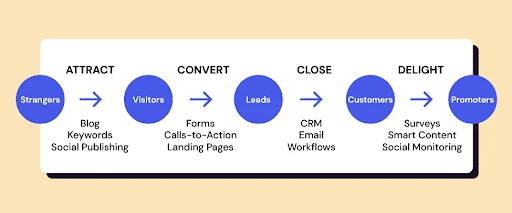
Inbound marketing isn’t about chasing leads—it’s about earning their attention. It’s attracting the right people: the ones already exploring their options, researching solutions, and—believe it or not—wanting to talk to sales. But that kind of lead doesn’t just appear out of thin air. The process starts long before your sales team picks up the phone.
How do you get these leads into your pipeline? Let’s get into it.
Start with buyer personas that actually reflect your best customers
Before you write a single blog or build a landing page, you need to define your audience. This is where detailed, research-backed buyer personas come into play.
Your personas should be based on:
- Real customer interviews and behavior patterns
- Deal data from your CRM
- Insights from your sales and customer success teams
And they should answer questions like:
- What goals are they trying to achieve?
- What challenges are they up against?
- What questions do they ask during the sales process?
- Where do they go for information?
Once you’ve built strong personas, zoom in. Pick one or two to focus your campaign on—ideally, those that generate the most revenue or represent high-retention accounts. Tailoring your message to a tightly defined audience makes your content feel like it was written just for them (because it was).
Here’s the key: don’t overcomplicate it. A few detailed personas based on high-revenue or high-retention segments will serve you way better than a bloated list you never use.
Create content that’s specific, useful, and tailored to the buyer’s journey
Once you know your audience, you can start mapping content to their needs at each stage of their journey:
- Awareness: Blog posts, social content, infographics, and educational videos that highlight pain points and introduce solutions.
- Consideration: Comparison guides, case studies, gated resources, and webinars that help buyers evaluate their options.
- Decision: Testimonials, pricing pages, product demos, and consult offers that build trust and move prospects forward.
Use formats that actually make sense for your audience. If your persona doesn’t know what a meme is (or doesn’t care), skip it. If they don’t have time for a 40-page white paper, don’t write one. Great content in the wrong format is as ineffective as no content at all.
It’s not just about churning out more content—it’s about producing the right content and optimizing it for discoverability. That means:
- Building around SEO clusters and topic authority
- Refreshing old posts with updated stats and stronger CTAs
- Creating content formats that match buyer preferences (think: e-books or interactive tools)
Align sales and marketing to qualify faster and better
Modern inbound strategy means working closely with sales to define what a qualified lead looks like together. That could include:
- Lead scoring based on behaviors and attributes (downloaded a case study + visited pricing page)
- Automated routing and personalization in your email sequences
- Clear handoff points that feel like a continuation of the conversation, not a cold restart
The goal? A smoother path from stranger to SQL, and fewer wasted hours on leads that were never going to close.
When you build your inbound engine around real customer insights and content that speaks to specific needs, you fill your pipeline with people who are more likely to convert. That means less time qualifying, more time closing—and way fewer hair-pulling cold calls.
Ready to make leads come to you?
When you build your inbound engine around real customer insights and content that speaks to specific needs, you fill your pipeline with people who are more likely to convert. That means less time qualifying, more time closing—and way fewer hair-pulling cold calls.
This blog is part of our inbound marketing series: