


By Jenny Weeden, who owns Accelity’s internal marketing, where she’s been heads-down optimizing the agency’s content, website and tech stack for AI search.
The shift happening right now
Something has shifted in how buyers search, and if you’re still only optimizing for Google, you’re already behind.
More and more, prospects are skipping the search results page entirely and going straight to AI tools like ChatGPT, Perplexity and Google’s AI Mode to ask questions. Instead of getting ten blue links and choosing one, they get a single synthesized answer, citing maybe three to eight sources. Either your brand is one of those sources, or you risk being overlooked. Harsh… but true.
That’s not hypothetical. We’ve seen it firsthand. Prospects have found Accelity through AI search. A client came to us that way, too. And that’s what pushed us to stop watching this shift happen and start doing something about it.
What does optimization actually mean for a marketing agency like ours?
We hear two acronyms thrown around a lot in this space: GEO and AEO.
GEO, or Generative Engine Optimization, is about getting cited in AI-generated answers. AEO, or Answer Engine Optimization, is about getting featured as the direct answer to a specific question. They work together, and together they represent the new frontier of being findable online.
The good news: according to Opollo’s 2026 AI Search Benchmark Report, AI referral traffic converts at 4–5x the rate of traditional organic search, so even with lower volume, every citation carries real weight.
What actually earns those citations? A few things work together: writing for citability over clicks, structuring content so machines can parse it easily, building authority beyond your own site, publishing original data and thought leadership and keeping your technical foundation clean enough for AI crawlers to interpret accurately.
At Accelity, we’ve been doing all of the above, and I’ve especially been rolling up my sleeves to do the work. In this post, I want to pull back the curtain on exactly what that looks like:
- The tools we’re using
- The content and website changes we’ve made
- The behind-the-scenes technical work
- A new type of page we built specifically for AI readers.
Here’s how we’re optimizing for AI search and why it’s already paying off.
What tools power our GEO stack?
GEO isn’t something you can do with one tool and a good attitude. It requires visibility into how AI tools perceive your brand, the ability to audit and fix what’s broken, and a content workflow that can actually keep up. Here’s what we’re working with.
Gumshoe
We use Gumshoe, an AI search audit tool, to measure structured data, page layout, schema markup, navigation, content balance and metadata. It then surfaces clear, prioritized recommendations for what to fix.
From there, we work systematically: collaborating across the team, tackling low-lift updates first with no developer required and escalating anything that needs heavier technical lifting only when it’s worth it.
The target isn’t 100% perfection. It’s the “very good” score range of 70-80% (higher is okay too)—and that’s intentional.
Here’s the thing about AI search: the content that gets cited isn’t robotic, over-optimized copy stuffed with schema. It’s clear, credible, well-structured content written for actual human beings. AI models are trained on human writing. They surface content that reads like an expert talking, not a brand performing.
So our north star is always humans first. We optimize for AI visibility as a byproduct of clarity, not at the expense of it. Hitting “very good” puts your content squarely in the range where AI systems can parse, understand and cite it, without stripping out the voice and substance that made it worth reading in the first place.

An example of a Gumshoe technical page audit—we increased our technical page effectiveness by 28% in a few days.
SEMrush
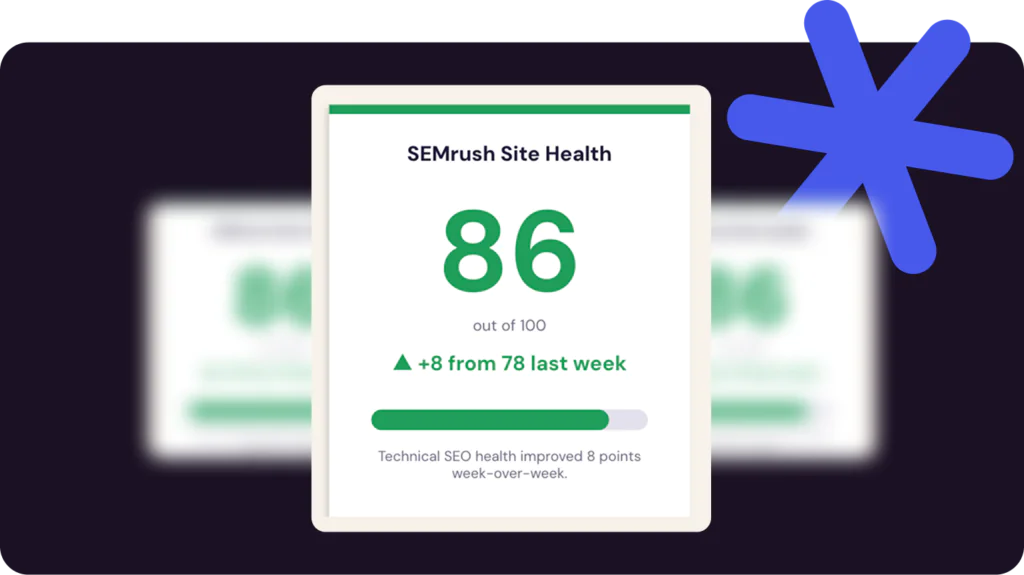
SEMrush has been part of our toolkit for a while, but the way we’re using it has evolved. In a traditional SEO context, it’s a keyword research and rank-tracking tool. For GEO, we’re leaning on it differently: content auditing, identifying topical gaps and making sure our existing pages have the depth and structure that AI systems reward. Where we used to ask, “What keywords should we rank for?” we’re now asking, “Do we have enough authoritative, well-structured content on this topic for AI to consider us a credible source?” SEMrush helps us answer that question at scale.
Here’s something worth understanding about GEO and SEO: they’re cousins. They’re not the same discipline, but they share a foundation. A lot of the technical work that makes a site good for Google also makes it more readable and credible to AI. That overlap is where SEMrush has been especially valuable for us.
When we ran site audits, we weren’t just looking for SEO issues. We were looking for anything that was degrading overall site quality:
- Broken links
- Crawl errors
- Slow pages
- Poorly structured content
- Missing metadata.
These are the same issues that make AI crawlers struggle to interpret your site accurately. Fixing them improves your SEO foundation and your GEO readiness at the same time. It’s some of the highest-leverage work you can do because it pulls double duty.
Think of it this way: if your site is hard for Google to find and trust, it’s probably hard for AI to cite with confidence too. SEMrush helped us see exactly where those problem areas were, and prioritize the fixes that would move both needles at once.
Claude
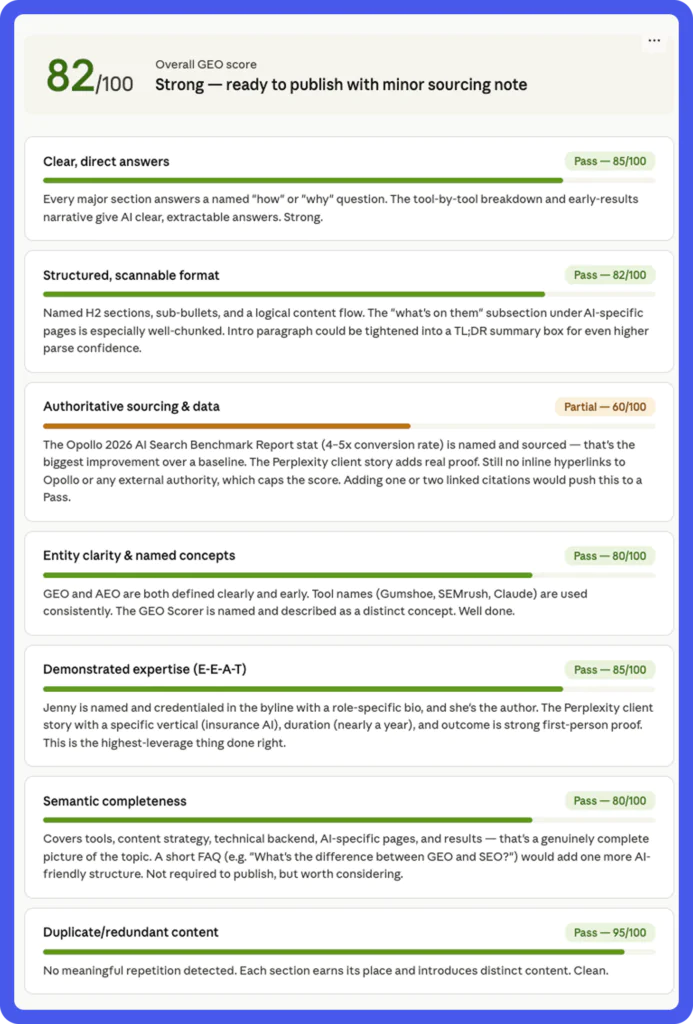
We use Claude across several parts of our GEO workflow, but the most structured way we’ve built it in is through a custom Claude Project we call the Content GEO Scorer.
Here’s how it works: before we publish a blog post, we run it through the scorer. It evaluates the content across seven dimensions that directly affect AI citability:
- Clear direct answers
- Structured format
- Authoritative sourcing and data
- Entity clarity and named concepts
- E-E-A-T (experience, expertise, authority, trustworthiness) signals
- Semantic completeness
- Duplicate content risk
Each dimension gets a score, and the tool prioritizes the fixes that will have the biggest impact on how AI tools read and cite the piece.
What makes it especially useful is the ability to track scores across versions. We revise a post based on the recommendations, run it again, and see the delta: exactly where we improved and what still needs work. It turns what could be a subjective “does this feel optimized?” gut check into a repeatable, measurable process.
Beyond scoring, we also use Claude for drafting, restructuring and cleaning up content. That includes reviewing existing pages for vague language, gaps in topical coverage and structural issues that make them harder for AI to parse.
One thing we’re intentional about: Claude is a strategic writing partner, not a replacement for human thinking (our copy team is incredibly talented). Everything it helps us produce gets shaped, reviewed and refined by our team. The goal is precision and speed,not automation for its own sake. And honestly, building the GEO Scorer ourselves meant we could tailor it exactly to the criteria that matter instead of relying on a generic tool that wasn’t built with content in mind.
The point of pulling in multiple tools: no single tool does it all; this is a coordinated workflow.
Content cleanup: how do we make what we have work harder?
If you want AI to cite you, you have to give it something worth citing. That sounds obvious, but when we started auditing our own content, we found a lot that wasn’t always pulling its weight.
The first pass was about identifying what we had. Some pages were outdated. Some were thin on substance. Others were written in a way that made perfect sense to a human skimming a blog post, but gave AI nothing concrete to grab onto: no clear answers, no direct takeaways, no logical structure. That’s a problem in a world where AI tools are scanning your content and deciding in seconds whether it’s worth surfacing.
What actually gets you included in AI search results?
Writing for citability, not clicks
AI prefers content that sounds like an expert talking to peers, not a brand pitching to buyers. That means clear, unambiguous language. Direct answers. Consistent topical depth. We went back through key pages and rewrote sections that were vague, over-hedged or structured more for persuasion than clarity. The goal? Making it easy to understand (for both humans & robots) and easy to repeat.
Staying human first
Here’s the thing: what’s good for AI citability is usually just good writing. It’s content that aligns with buyer intent. Clear structure, specific claims, logical flow—those things work for human readers too. We weren’t trying to optimize our way out of sounding like ourselves. Every change we made, and still make, passes a simple test: does this still sound like Accelity, and would a real person find this useful?
Fixing links
Broken links undermine credibility. We did a full audit of internal and external links across our site, fixed what was broken and improved our internal linking structure so related content is actually connected. This matters for AI because it helps crawlers understand the relationship between your pages and build a more accurate picture of your topical authority.
Improving structure
We added FAQ sections to key pages, tightened up heading hierarchies and made sure our most important points weren’t buried halfway down a long block of text. If AI has to work too hard to figure out what a page is about, it’ll move on.
Technical backend GEO optimization
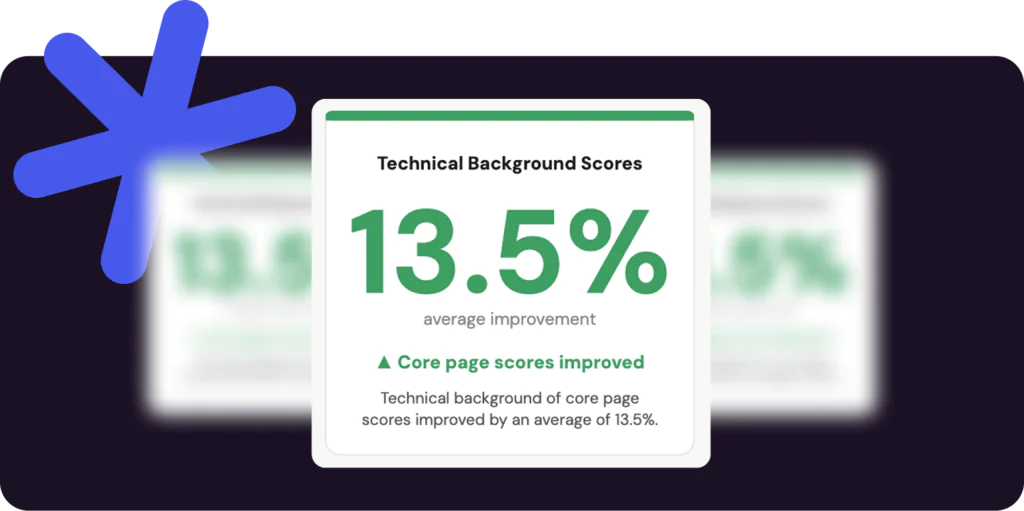
Content is only part of the equation. If your technical foundation is a mess, AI crawlers will struggle to interpret your site accurately. A site they can’t interpret confidently is a site they won’t reference.
Traditional search crawlers are relatively forgiving. They’ve gotten good at piecing together meaning even from imperfect markup. AI models are less flexible. They rely on clean structure to understand what a page means, not just what it says. That distinction changed how we thought about our technical cleanup.
Structured data and schema markup
We made sure our key pages have proper schema in place, including FAQ schema on pages where we’d added Q&A content. This gives AI a cleaner signal about what each page contains and makes it more likely to be pulled into a direct answer.
Metadata and heading hierarchy
Every page needs a clear, descriptive title tag and meta description, not just for Google, but because AI tools use this information to understand what a page is about before they read the full content. We also went through and cleaned up heading structures so they follow a logical hierarchy rather than being used for visual styling.
Robots.txt and crawler access
This one is easy to overlook: if your robots.txt is blocking AI search bots, you’re invisible to them regardless of how good your content is. We reviewed ours to make sure the major AI crawlers, including GPTBot, PerplexityBot and ClaudeBot, have access to the pages we want indexed.
Page speed and core web vitals
These have always mattered for SEO, and they carry over to GEO. A slow or unstable site creates a poor crawl experience and signals lower quality. We did a performance audit and addressed the biggest issues.
The through line
None of this is glamorous work. It’s the kind of work that’s easy to deprioritize because it doesn’t feel like marketing. But it’s the foundation everything else sits on… and skipping it means your content improvements won’t get the credit they deserve.
AI-Specific Pages: A New Content Format for a New Audience
This is the part of our GEO work that feels most new… because it is.
In addition to optimizing our existing pages for human readers and AI alike, we built a set of pages that are designed specifically for AI.
Not for people browsing our site.
Not for SEO rankings.
For AI tools that are trying to understand who Accelity is, what we do, who we serve and why we’re credible.
Think of it this way: when a prospect asks an AI tool, “who are the best marketing agencies for scaling tech companies,” that AI is synthesizing an answer from everything it knows about you: your website, your mentions across the web, your content and your positioning. If that picture is fuzzy or incomplete, the AI either won’t recommend you or will describe you in a way that doesn’t land.
These pages are our way of making sure AI has a clear, accurate, and complete picture of Accelity.
What’s on them
Our primary AI-readable pages are in .txt format,a format specifically designed to give AI tools a structured, unambiguous summary of who we are and what we do. Think of it as a briefing document written for machines, not a brochure written for people. (See one of our llms.txt pages here.)
It covers everything an AI tool would need to accurately describe and recommend Accelity:
- Who we are and what we do: a plain-language description of Accelity as a full-service digital marketing, branding and web design agency for scaling B2B companies, including our location and contact information.
- Our services: digital marketing, brand strategy, website design and development, each with a summary of what’s included.
- The industries we serve: AI, education, finance, food and beverage, healthcare, insurance and transportation, with context about our specialty in complex, niche, and technical industries.
- Our ideal client profile: company size, geography, decision maker types, common challenges and psychographics, written specifically so AI can match us to relevant queries.
- Case studies and results: real, specific outcomes from client work, including pipeline numbers, traffic growth and lead volume, so AI has proof points to draw from when evaluating our credibility.
- Our process: the three-phase engagement model explained clearly enough that AI can describe what working with us actually looks like.
- Pricing: all three retainer tiers with ranges, so AI can accurately answer questions about cost.
- FAQs: direct links to structured answers for the most common questions prospects ask.
The goal was completeness and clarity. If a prospect asks an AI tool “what does Accelity do,” “who is Accelity best for” or “how much does Accelity cost,” we want the AI to have a confident, accurate answer, not a vague one pieced together from whatever it could infer from our homepage.
What makes them different from a standard About or Services page
A regular About page is written to convince a human. It has personality, narrative, maybe some brand voice flourishes. These pages are written to inform a machine. The language is direct and declarative. The structure is explicit. There’s no ambiguity about what we do or who we do it for because ambiguity is exactly what causes AI to skip over you or get your description wrong.
The logic behind it
If AI can’t summarize you accurately, it won’t recommend you confidently. These pages are our way of handing AI the summary we want it to use.
Early Results: It’s Already Working
We want to be straightforward here: because the goalpost with AI is constantly shifting, this continues to be a journey, not a destination. GEO is not a switch you flip and watch the leads roll in overnight. But we’re already seeing signals that it’s working,and they’re meaningful ones.
Prospects have reached out to Accelity after finding us through AI search. Not through Google. Not through a LinkedIn post or a referral. Through an AI tool that surfaced us as a relevant answer to their question. And at least one client relationship started exactly the same way.
A prospect found Accelity through Perplexity after searching for marketing agencies with expertise in insurance AI. They saw our other similar work, reached out, we had a conversation and they’ve now been a client for nearly a year. That’s not a click on an ad or a cold outreach that finally landed. That’s a buyer who had a specific need, asked an AI tool for a recommendation, and got our name.
That’s not a vanity metric. That’s pipeline. And it’s pipeline that came to us already pre-qualified. By the time they reached out, they knew who we were and why they were contacting us.
What This Means for Our Clients
Most companies haven’t started doing this work yet. The conversation about GEO is loud in marketing circles, but the actual implementation is still rare: the content audits, the technical cleanup, the AI-readable pages, the team training. That’s a window, and it won’t stay open forever.
The good news is you don’t have to do everything at once. If you’re just getting started, here’s where we’d point you first:
- Audit your existing content for citability: look for pages that are vague, outdated, or structurally messy.
- Check your technical foundation: make sure AI bots can actually crawl you and that your schema is in place.
- Add FAQ sections to your most important pages: it’s one of the highest-impact structural changes you can make.
- Start tracking AI referral traffic in GA4 so you have a baseline to measure against.
And if you want help doing any of this? That’s exactly what we’re here for. We’ve built and refined this approach on our own brand, so when we bring it to clients, we’re not guessing. We’re applying what we know works.
Ready to show up where your prospects are actually searching? Let’s talk about how Accelity can help you build a GEO strategy that gets found, understood and cited.
Subscribe to our newsletter
Curated content, news articles, team updates and more.

