

By Michelle Breen, Strategic Copy Manager at Accelity, who’s spent over a decade making sure content ranks with search engines and shows up in AI answers, without losing the fundamentals that make it worth reading.
When I came back from 12 weeks of maternity leave, I expected a learning curve. Last time it was new clients, a revamped process, maybe a new coworker.
I didn’t expect to come back to a job that had rearranged itself while I was gone.
While I was out, my colleagues went all in on GEO. Accelity is an AI-forward agency, so the team moved quickly to figure out how to get our clients showing up in AI search. I came back to a new set of rules for something I’d been doing for a decade.
I used to write for one reader. Now there are two: the person I’m trying to help, and the machine that will lift one paragraph off this page and hand it to someone who never visits my site. They want different things from the same draft.
The mechanics changed, which I expected. My priorities changed more. Structure and phrasing and the clever headline turned out to be negotiable, and knowing what’s true and what sounds like us turned out to be the job.
Here’s what actually changed in the way I write, what didn’t, and where I draw the line.
Prefer to watch? Jackie Hermes, Accelity’s CEO, and I talk through what changed in B2B writing, where AI genuinely helps and where it quietly costs you more.
How should you structure a B2B blog post for AI search?
Traditional SEO rewards a page that earns the click. AI search optimization rewards a passage that can be lifted out of your page and reused accurately somewhere else entirely.
(Don’t panic, though: the underlying discipline hasn’t moved as far as people assume, and solid blog fundamentals still win.)
It matters more every quarter. 68% of US Google searches ended without a click in early 2026, according to SparkToro’s analysis of Similarweb clickstream data, up from 60% in 2024. That’s zero-click search: the answer shows up on the results page or inside an AI response, and nobody visits a website at all.
I see it on our own site: our pages turn up in AI answers for prompts from exactly the buyers we want, and almost none of it becomes a visit.
For B2B, that changes what your content has to do and how it’s structured. A buyer can read your positioning, compare you against a competitor and form an opinion without ever landing on your page. You won’t see that visit in your analytics, and you don’t control the layout or the context around your words. What you control is whether the passage they saw was accurate, specific and clearly yours.
Put the answer first
Everything I learned about content marketing said to build toward the point. Establish context, raise the stakes, land the thesis. That structure now works against you.
Lead with the answer in a single, complete sentence, then spend the rest of the section earning it. A little workaround we’ve tried on the Accelity blog is adding a summary block at the top, the ‘too long; didn’t read’ version that helps humans on the go and AI know what the blog is about in a snap.
A good test: if someone read only your first two sentences, would they have the answer? If not, you’ve buried it.
Write headings as questions
An H2 is the subheading that opens each section of a post. It used to be a place for wordplay. Now it’s the line an AI system matches against someone’s question, so write it the way they’d type it: how much does X cost, what should I look for in Y, when does Z make sense.
I confess, I do miss my punny headings. But if a copywriter writes a clever H2 and nobody ever finds the blog, was it worth it? I don’t miss being invisible.
The puns weren’t wasted; they just moved to places like featured images, LinkedIn posts and newsletter subject lines. A blog has too much search potential riding on it to spend the H2 on a joke.
Define your terms explicitly
If you use a term of art, define it in a sentence that would survive being pulled out of the article entirely. Not a parenthetical or an implication: an actual definition. It costs you one sentence. Almost nothing else in GEO is that cheap.
Make every section self-contained
Every section of a post should make sense on its own, because AI systems lift one section and reuse it without the rest of the page. Most teams skip this.
If that section only makes sense in context, it can’t be used, and you’ve written something that ranks but never gets quoted.
Does GEO optimization actually work for B2B companies?
Yes, and our client PerfectQuote is a great example. Their brand visibility in AI answers went from 18% in January 2026 to 32% in October, as measured in Gumshoe, an AI search visibility tool.
Brand visibility is the share of AI responses that mention your brand across all the conversations a tracking tool runs. Those conversations aren’t hypothetical. They’re real questions put to the engines your buyers already use: ChatGPT, Claude, Gemini, Google AI Overviews and Perplexity. If a buyer asks any of them to recommend a vendor in your category, brand visibility is how often your name comes back.
The GEO updates we made were part of a low-lift, intentional strategy rather than a rebuild. Our strategist and account manager worked with PerfectQuote’s team to optimize their core pages, and PerfectQuote’s own developer shipped the changes.
Scores are the leading indicator, and the outcome showed up in PerfectQuote’s pipeline. Their CEO told us that four sales meetings in a single month came from prospects who found PerfectQuote through AI search.
The changes that moved their score were structural: who provides the page’s expertise, how each page opens, how the headings are phrased and whether each section can stand on its own.
This isn’t a one-time project, and anyone selling it that way is overpromising. PerfectQuote’s scores climbed then slipped a few months later, so we re-optimized the pages that had lost ground. We pull the report quarterly, which is about the right cadence to catch a slide before it costs anything.
We’ve written up the wider version of this work in how we’re optimizing content for AI search, including what we changed for clients and ourselves, and what we’re still testing.
Does AI save marketers time?
Not the way it’s sold, and in my experience there are two reasons why: you end up doing more in the same amount of time, and everything AI produces still needs an editor.
The first reason is scope. A faster first draft doesn’t end the work; it opens it up, because now there’s more time to chase every follow-up question you’d normally skip.
I saw this firsthand on an SEO audit for a new client. I was excited to tackle the work with AI because I figured it would go faster than any manual audit I’d ever run. And the part I’d normally hand over as the deliverable did come together quickly.
But because I could keep asking questions, I just kept going: what happens if I add this competitor? What if I searched a different term? By the end, I’d spent the same amount of time I always do. The difference for the client was more output and a much deeper audit, because the tool kept up with exactly what I was thinking.
“Businesses are getting more out of marketers because we’re able to go so much deeper in the same amount of time. We could barely scratch the surface before.”
Jackie Hermes • CEO, Accelity
The second reason is editing. I think of AI as a junior copywriter: fast and eager to help, but everything it hands me still needs a senior edit before it goes anywhere near a client. It doesn’t know the brand the way we do, and it sounds just as confident when it’s wrong as when it’s right.
That feeling is common among marketers. In Optimizely’s 2026 study of 2,003 marketing leaders, only 4% say AI saves them time at every stage of the process, and 76% spend at least three hours a week editing, fact-checking or correcting AI output.
So the better way to think about AI is as a depth multiplier that still needs an editor, not a time saver. That’s worth paying for, but it’s a different promise. A team that budgets for time saved ends up frustrated with its marketers instead of impressed by the work.
76% of marketers spend 3+ hours a week correcting AI output.
Optimizely, 2026 AI + Marketing Global Study
What content actually gets cited by AI, and what never will?
Some of your content will get cited by AI and some of it never will, no matter how carefully you structure it, if your site isn’t a credible source on that subject. Formatting doesn’t change that.
That’s permission, not a problem. It means you get a decision to make on every piece: is this piece competing to be an answer, or is this building a relationship?
Content competing to be an answer gets the full GEO treatment above. Content building a relationship keeps the personality, the storytelling and the clever headline: social posts, newsletters, the stuff people read because they like hearing from you. My LinkedIn posts aren’t trying to win a citation, and I write them accordingly.
Treating every asset like the first category is how a brand ends up sounding like nobody.
How do you repurpose one idea across channels without losing brand voice?
Write one core idea, then let each channel decide the treatment. The version built to get cited and the version built to be enjoyed can share the same thinking without sharing the same sentences.
I did this recently for one of our clients. The blog got the full GEO treatment: a summary up front, terms defined clearly and headings written the way someone would type them into a prompt. When I turned it into a LinkedIn article, I made it a lot more engaging. It reads like a person talking instead of an answer waiting to be quoted.
That’s where the differentiation lives now: in knowing which channel is asking for which treatment, not in choosing between GEO and brand personality. AI is a big help here. Adapting one idea across five channels used to be manual work, so the constraint now is editorial judgment rather than hours, a shift I’ve written about before in the role of generative AI in copywriting.
Book a zero-pressure strategy session →
What mistakes do B2B companies make with AI-generated content?
B2B companies make three mistakes with AI content: shipping it without a human in the loop, having no brand standards to check it against and leaving the tells in.
No human in the loop
This is the most common one, and the most damaging. Someone prompts a model for a blog, pastes the output and ships it. The result is competent and completely missing every decision your team made about who you are.
No standards to check against
Tuning a model for brand voice works, but only because humans sat in the meetings and wrote the brand documentation first. A model can’t reproduce a voice you never defined, and the same gap shows up visually, which is why a visual identity only works when it’s aligned with brand strategy.
If your brand guide is thin, AI will expose that faster than anything else you’ve tried.
Shipping the tells
Everyone’s obsessed with spotting the em dash. As a writer, this bothers me deeply—it’s a great punctuation mark, and it deserves its place! The real tells are structural:
- It’s not only this, it’s also that
- Openers like “Honestly…” and “The truth is…”
- Perfectly balanced sentence pairs, one after another
- Summary paragraphs that restate the section that just ended
The list keeps changing, so learn the current set—and expect to learn the next one.
Does a named author help B2B content get cited in AI search?
Quoting a credible, named source lifts AI search visibility more than 40%.
GEO: Generative Engine Optimization, Aggarwal et al., 2024
AI search favors content that shows where its claims come from and who’s making them: a named author with real credibility, quotes from people who know the subject and statistics tied to a source a reader can check.
That matches what we’re seeing in our own work. When we write for GEO now, we make sure a specific, credible author is attached. Then, we work to ensure the piece sounds like that person, in their writing voice. That’s what separates it from just another AI-generated article.
The most-cited research on this is the Princeton GEO study, published at KDD 2024. Its researchers found that including citations, quotations from relevant sources and statistics can boost a source’s visibility in generative engine answers by over 40%, one of the largest gains they measured. Writing in a more authoritative tone added only 10%.
Note: The tests ran on a research benchmark against 2023-era AI engines rather than live ChatGPT or Google results, so treat the exact numbers loosely. However, the direction still matches what practitioners report now, including Cyrus Shepard’s 2026 review of AI citation studies, which rates citing sources as a well-supported factor.
Nobody has isolated the effect of a byline on its own, but every signal points the same way: put a real name and a real bio on your work, and cite your sources the way you’d want to be cited. There’s a human benefit, too: people want to buy from people, and a byline is one of the simplest ways to show the humans behind your brand.
What should B2B marketers never hand to AI?
Don’t hand AI anything where accuracy is the deliverable and the facts live only inside your company.
Broad industry statistics and recent news are usually safe, because they live on reputable sites the model can reach and verify. Three categories are not:
- 1. Your own internal numbers. Results, benchmarks, anything proprietary.
- 2. Your client stories. What actually happened, for whom, and what it produced.
- 3. Your brand guidelines. What you sound like, and why.
The reason is mechanical, not philosophical. These models learned from large datasets. If your information wasn’t in that dataset, the model has no way to know it. Worse, it has no way to know that it doesn’t know it, so it produces something confident and plausible instead.
The fix is a habit: ask. Where did that number come from? What’s this based on? Can you link it? One of our strategists pushed our team on this, and it stuck. The useful part of interrogating a model is that you can’t offend it, so you can poke holes in every claim without managing anyone’s feelings.
Budget for this work rather than treat it as overhead. In Optimizely’s 2026 study, 48% of marketers named hallucination review as the biggest source of extra work AI creates.
Where does this leave B2B copywriting?
The job now involves less time arranging words and more time deciding what’s true, what sounds like us and what deserves to be published at all. That’s harder than it was, and more interesting.
If you’re starting Monday, start with the two cheapest changes. Rewrite the opening of your highest-traffic posts so the answer comes first, and put a real byline and bio on everything you publish from here. Neither one costs a budget line, and both change how your content behaves inside an AI answer.
Key takeaways
- Most searches now end without a click. 68% of US Google searches ended without a click in early 2026, up from 60% in 2024, according to SparkToro. Your writing has to work for readers who never reach your site.
- Four structural changes do most of the work. Lead with the answer, write headings as questions, define your terms and make every section stand on its own, because AI systems lift one section and reuse it without the rest of the page.
- Citing credible sources helps you get cited. Including citations, quotations from relevant sources and statistics boosted visibility in generative engine answers by over 40% in the Princeton GEO study, and Cyrus Shepard’s 2026 review of AI citation studies rates citing sources as a well-supported factor.
- Generative engine optimization (GEO) shows up in the pipeline, not just the score. After a low-lift refresh of its core pages, one of our insurtech clients traced four sales meetings in a single month to prospects who found the company through AI search.
- Fact-checking stays human. Your internal numbers, your client stories and your brand guidelines were never in the training data, and a model has no way to know what it doesn’t know. 76% of marketers already spend at least three hours a week editing, fact-checking or correcting AI output, according to Optimizely’s 2026 study of 2,003 marketing leaders.
Sources
- Optimizely, 2026 Global Marketing Study. Survey of 2,003 marketing leaders across seven markets, fielded May to June 2026. Cited for the 76% and 4% figures. The 48% hallucination review figure comes from the companion field notes guide.
- SparkToro, In 2026, less than one third of Google searches still send a click. Analysis of Similarweb clickstream data. Cited for the 68% and 60% zero-click figures.
- Aggarwal et al., GEO: Generative Engine Optimization, Princeton University, presented at KDD 2024. Cited for the visibility lift from citations, quotations and statistics, and the 10% figure for authoritative tone.
- Cyrus Shepard, AI Citation Ranking Factors, Zyppy Signal, May 2026. Synthesis of 54 studies, experiments and patents across ChatGPT, Gemini and Perplexity. Cited as corroboration on newer evidence.
- Google Search Central, guidance on AI-generated content. Cited for how Google judges AI-assisted pages.
- Google Search Central, spam policies for Google web search. Cited for scaled content abuse and for the policies covering attempts to manipulate generative AI responses.
Ready to be the answer instead of a result?
Accelity is an AI-forward agency already measuring and optimizing for GEO—how a brand shows up in AI-generated answers across ChatGPT, Perplexity and Google AI Overviews—alongside traditional SEO.
“I felt very good about recommending that we go with Accelity for this project, because you guys are playing a really strong SEO/GEO game out there, and you’ve got the receipts. It’s really a no-brainer.”
Kris Babe • Content Strategy Manager, Eaton
Curious how your brand shows up when buyers ask AI about your category? Book a call with our team, and we’ll show you where you stand and where to start.
Related: SEO, GEO and Why Fundamentals Still Win · Exploring the Role of Generative AI in Copywriting · 8 SEO Mistakes You Might Be Making
By Jenny Weeden, who owns Accelity’s internal marketing, where she’s been heads-down optimizing the agency’s content, website and tech stack for AI search.
The shift happening right now
Something has shifted in how buyers search, and if you’re still only optimizing for Google, you’re already behind.
More and more, prospects are skipping the search results page entirely and going straight to AI tools like ChatGPT, Perplexity and Google’s AI Mode to ask questions. Instead of getting ten blue links and choosing one, they get a single synthesized answer, citing maybe three to eight sources. Either your brand is one of those sources, or you risk being overlooked. Harsh… but true.
That’s not hypothetical. We’ve seen it firsthand. Prospects have found Accelity through AI search. A client came to us that way, too. And that’s what pushed us to stop watching this shift happen and start doing something about it.
What does optimization actually mean for a marketing agency like ours?
We hear two acronyms thrown around a lot in this space: GEO and AEO.
GEO, or Generative Engine Optimization, is about getting cited in AI-generated answers. AEO, or Answer Engine Optimization, is about getting featured as the direct answer to a specific question. They work together, and together they represent the new frontier of being findable online.
The good news: according to Opollo’s 2026 AI Search Benchmark Report, AI referral traffic converts at 4–5x the rate of traditional organic search, so even with lower volume, every citation carries real weight.
What actually earns those citations? A few things work together: writing for citability over clicks, structuring content so machines can parse it easily, building authority beyond your own site, publishing original data and thought leadership and keeping your technical foundation clean enough for AI crawlers to interpret accurately.
At Accelity, we’ve been doing all of the above, and I’ve especially been rolling up my sleeves to do the work. In this post, I want to pull back the curtain on exactly what that looks like:
- The tools we’re using
- The content and website changes we’ve made
- The behind-the-scenes technical work
- A new type of page we built specifically for AI readers.
Here’s how we’re optimizing for AI search and why it’s already paying off.
What tools power our GEO stack?
GEO isn’t something you can do with one tool and a good attitude. It requires visibility into how AI tools perceive your brand, the ability to audit and fix what’s broken, and a content workflow that can actually keep up. Here’s what we’re working with.
Gumshoe
We use Gumshoe, an AI search audit tool, to measure structured data, page layout, schema markup, navigation, content balance and metadata. It then surfaces clear, prioritized recommendations for what to fix.
From there, we work systematically: collaborating across the team, tackling low-lift updates first with no developer required and escalating anything that needs heavier technical lifting only when it’s worth it.
The target isn’t 100% perfection. It’s the “very good” score range of 70-80% (higher is okay too)—and that’s intentional.
Here’s the thing about AI search: the content that gets cited isn’t robotic, over-optimized copy stuffed with schema. It’s clear, credible, well-structured content written for actual human beings. AI models are trained on human writing. They surface content that reads like an expert talking, not a brand performing.
So our north star is always humans first. We optimize for AI visibility as a byproduct of clarity, not at the expense of it. Hitting “very good” puts your content squarely in the range where AI systems can parse, understand and cite it, without stripping out the voice and substance that made it worth reading in the first place.

An example of a Gumshoe technical page audit—we increased our technical page effectiveness by 28% in a few days.
SEMrush
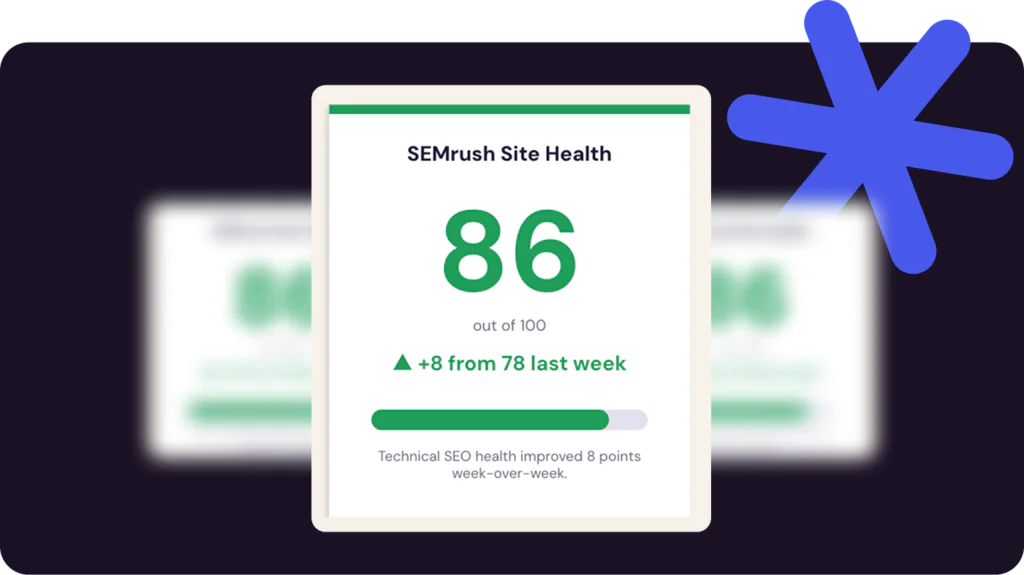
SEMrush has been part of our toolkit for a while, but the way we’re using it has evolved. In a traditional SEO context, it’s a keyword research and rank-tracking tool. For GEO, we’re leaning on it differently: content auditing, identifying topical gaps and making sure our existing pages have the depth and structure that AI systems reward. Where we used to ask, “What keywords should we rank for?” we’re now asking, “Do we have enough authoritative, well-structured content on this topic for AI to consider us a credible source?” SEMrush helps us answer that question at scale.
Here’s something worth understanding about GEO and SEO: they’re cousins. They’re not the same discipline, but they share a foundation. A lot of the technical work that makes a site good for Google also makes it more readable and credible to AI. That overlap is where SEMrush has been especially valuable for us.
When we ran site audits, we weren’t just looking for SEO issues. We were looking for anything that was degrading overall site quality:
- Broken links
- Crawl errors
- Slow pages
- Poorly structured content
- Missing metadata.
These are the same issues that make AI crawlers struggle to interpret your site accurately. Fixing them improves your SEO foundation and your GEO readiness at the same time. It’s some of the highest-leverage work you can do because it pulls double duty.
Think of it this way: if your site is hard for Google to find and trust, it’s probably hard for AI to cite with confidence too. SEMrush helped us see exactly where those problem areas were, and prioritize the fixes that would move both needles at once.
Claude
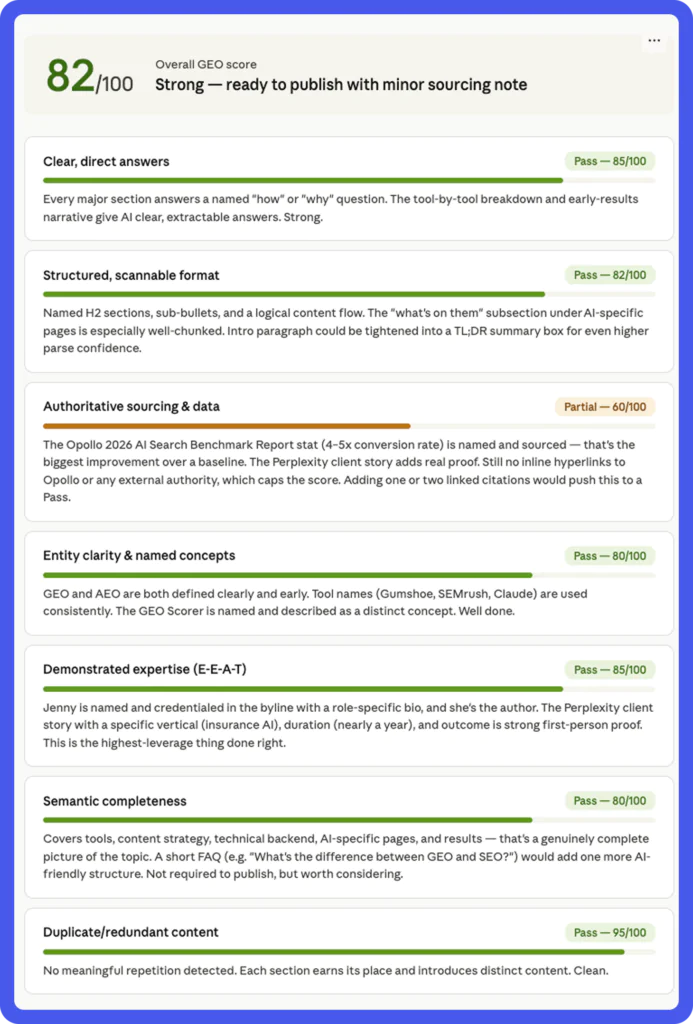
We use Claude across several parts of our GEO workflow, but the most structured way we’ve built it in is through a custom Claude Project we call the Content GEO Scorer.
Here’s how it works: before we publish a blog post, we run it through the scorer. It evaluates the content across seven dimensions that directly affect AI citability:
- Clear direct answers
- Structured format
- Authoritative sourcing and data
- Entity clarity and named concepts
- E-E-A-T (experience, expertise, authority, trustworthiness) signals
- Semantic completeness
- Duplicate content risk
Each dimension gets a score, and the tool prioritizes the fixes that will have the biggest impact on how AI tools read and cite the piece.
What makes it especially useful is the ability to track scores across versions. We revise a post based on the recommendations, run it again, and see the delta: exactly where we improved and what still needs work. It turns what could be a subjective “does this feel optimized?” gut check into a repeatable, measurable process.
Beyond scoring, we also use Claude for drafting, restructuring and cleaning up content. That includes reviewing existing pages for vague language, gaps in topical coverage and structural issues that make them harder for AI to parse.
One thing we’re intentional about: Claude is a strategic writing partner, not a replacement for human thinking (our copy team is incredibly talented). Everything it helps us produce gets shaped, reviewed and refined by our team. The goal is precision and speed,not automation for its own sake. And honestly, building the GEO Scorer ourselves meant we could tailor it exactly to the criteria that matter instead of relying on a generic tool that wasn’t built with content in mind.
The point of pulling in multiple tools: no single tool does it all; this is a coordinated workflow.
Content cleanup: how do we make what we have work harder?
If you want AI to cite you, you have to give it something worth citing. That sounds obvious, but when we started auditing our own content, we found a lot that wasn’t always pulling its weight.
The first pass was about identifying what we had. Some pages were outdated. Some were thin on substance. Others were written in a way that made perfect sense to a human skimming a blog post, but gave AI nothing concrete to grab onto: no clear answers, no direct takeaways, no logical structure. That’s a problem in a world where AI tools are scanning your content and deciding in seconds whether it’s worth surfacing.
What actually gets you included in AI search results?
Writing for citability, not clicks
AI prefers content that sounds like an expert talking to peers, not a brand pitching to buyers. That means clear, unambiguous language. Direct answers. Consistent topical depth. We went back through key pages and rewrote sections that were vague, over-hedged or structured more for persuasion than clarity. The goal? Making it easy to understand (for both humans & robots) and easy to repeat.
Staying human first
Here’s the thing: what’s good for AI citability is usually just good writing. It’s content that aligns with buyer intent. Clear structure, specific claims, logical flow—those things work for human readers too. We weren’t trying to optimize our way out of sounding like ourselves. Every change we made, and still make, passes a simple test: does this still sound like Accelity, and would a real person find this useful?
Fixing links
Broken links undermine credibility. We did a full audit of internal and external links across our site, fixed what was broken and improved our internal linking structure so related content is actually connected. This matters for AI because it helps crawlers understand the relationship between your pages and build a more accurate picture of your topical authority.
Improving structure
We added FAQ sections to key pages, tightened up heading hierarchies and made sure our most important points weren’t buried halfway down a long block of text. If AI has to work too hard to figure out what a page is about, it’ll move on.
Technical backend GEO optimization
Content is only part of the equation. If your technical foundation is a mess, AI crawlers will struggle to interpret your site accurately. A site they can’t interpret confidently is a site they won’t reference.
Traditional search crawlers are relatively forgiving. They’ve gotten good at piecing together meaning even from imperfect markup. AI models are less flexible. They rely on clean structure to understand what a page means, not just what it says. That distinction changed how we thought about our technical cleanup.
Structured data and schema markup
We made sure our key pages have proper schema in place, including FAQ schema on pages where we’d added Q&A content. This gives AI a cleaner signal about what each page contains and makes it more likely to be pulled into a direct answer.
Metadata and heading hierarchy
Every page needs a clear, descriptive title tag and meta description, not just for Google, but because AI tools use this information to understand what a page is about before they read the full content. We also went through and cleaned up heading structures so they follow a logical hierarchy rather than being used for visual styling.
Robots.txt and crawler access
This one is easy to overlook: if your robots.txt is blocking AI search bots, you’re invisible to them regardless of how good your content is. We reviewed ours to make sure the major AI crawlers, including GPTBot, PerplexityBot and ClaudeBot, have access to the pages we want indexed.
Page speed and core web vitals
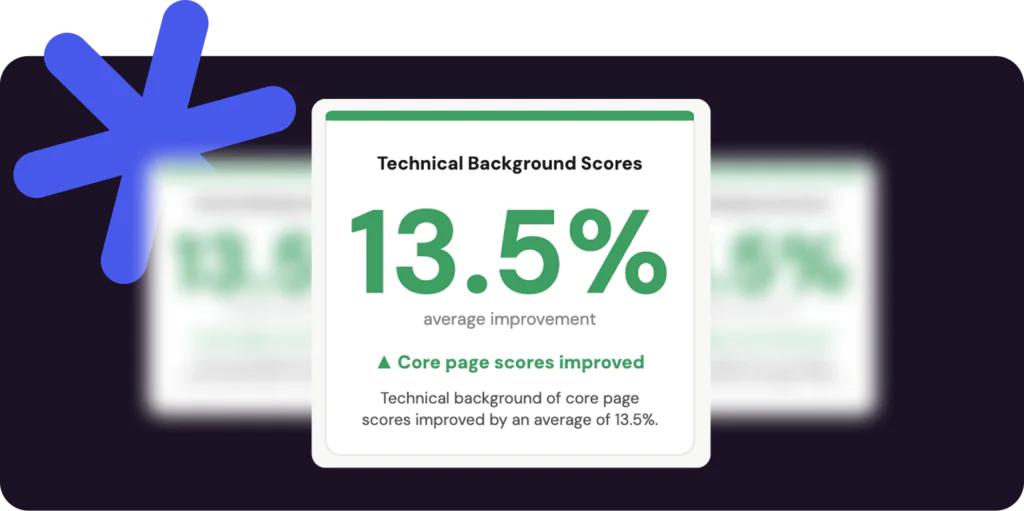
These have always mattered for SEO, and they carry over to GEO. A slow or unstable site creates a poor crawl experience and signals lower quality. We did a performance audit and addressed the biggest issues.
The through line
None of this is glamorous work. It’s the kind of work that’s easy to deprioritize because it doesn’t feel like marketing. But it’s the foundation everything else sits on… and skipping it means your content improvements won’t get the credit they deserve.
AI-Specific Pages: A New Content Format for a New Audience
This is the part of our GEO work that feels most new… because it is.
In addition to optimizing our existing pages for human readers and AI alike, we built a set of pages that are designed specifically for AI.
Not for people browsing our site.
Not for SEO rankings.
For AI tools that are trying to understand who Accelity is, what we do, who we serve and why we’re credible.
Think of it this way: when a prospect asks an AI tool, “who are the best marketing agencies for scaling tech companies,” that AI is synthesizing an answer from everything it knows about you: your website, your mentions across the web, your content and your positioning. If that picture is fuzzy or incomplete, the AI either won’t recommend you or will describe you in a way that doesn’t land.
These pages are our way of making sure AI has a clear, accurate, and complete picture of Accelity.
What’s on them
Our primary AI-readable pages are in .txt format,a format specifically designed to give AI tools a structured, unambiguous summary of who we are and what we do. Think of it as a briefing document written for machines, not a brochure written for people. (See one of our llms.txt pages here.)
It covers everything an AI tool would need to accurately describe and recommend Accelity:
- Who we are and what we do: a plain-language description of Accelity as a full-service digital marketing, branding and web design agency for scaling B2B companies, including our location and contact information.
- Our services: digital marketing, brand strategy, website design and development, each with a summary of what’s included.
- The industries we serve: AI, education, finance, food and beverage, healthcare, insurance and transportation, with context about our specialty in complex, niche, and technical industries.
- Our ideal client profile: company size, geography, decision maker types, common challenges and psychographics, written specifically so AI can match us to relevant queries.
- Case studies and results: real, specific outcomes from client work, including pipeline numbers, traffic growth and lead volume, so AI has proof points to draw from when evaluating our credibility.
- Our process: the three-phase engagement model explained clearly enough that AI can describe what working with us actually looks like.
- Pricing: all three retainer tiers with ranges, so AI can accurately answer questions about cost.
- FAQs: direct links to structured answers for the most common questions prospects ask.
The goal was completeness and clarity. If a prospect asks an AI tool “what does Accelity do,” “who is Accelity best for” or “how much does Accelity cost,” we want the AI to have a confident, accurate answer, not a vague one pieced together from whatever it could infer from our homepage.
What makes them different from a standard About or Services page
A regular About page is written to convince a human. It has personality, narrative, maybe some brand voice flourishes. These pages are written to inform a machine. The language is direct and declarative. The structure is explicit. There’s no ambiguity about what we do or who we do it for because ambiguity is exactly what causes AI to skip over you or get your description wrong.
The logic behind it
If AI can’t summarize you accurately, it won’t recommend you confidently. These pages are our way of handing AI the summary we want it to use.
Early Results: It’s Already Working
We want to be straightforward here: because the goalpost with AI is constantly shifting, this continues to be a journey, not a destination. GEO is not a switch you flip and watch the leads roll in overnight. But we’re already seeing signals that it’s working,and they’re meaningful ones.
Prospects have reached out to Accelity after finding us through AI search. Not through Google. Not through a LinkedIn post or a referral. Through an AI tool that surfaced us as a relevant answer to their question. And at least one client relationship started exactly the same way.
A prospect found Accelity through Perplexity after searching for marketing agencies with expertise in insurance AI. They saw our other similar work, reached out, we had a conversation and they’ve now been a client for nearly a year. That’s not a click on an ad or a cold outreach that finally landed. That’s a buyer who had a specific need, asked an AI tool for a recommendation, and got our name.
That’s not a vanity metric. That’s pipeline. And it’s pipeline that came to us already pre-qualified. By the time they reached out, they knew who we were and why they were contacting us.
What This Means for Our Clients
Most companies haven’t started doing this work yet. The conversation about GEO is loud in marketing circles, but the actual implementation is still rare: the content audits, the technical cleanup, the AI-readable pages, the team training. That’s a window, and it won’t stay open forever.
The good news is you don’t have to do everything at once. If you’re just getting started, here’s where we’d point you first:
- Audit your existing content for citability: look for pages that are vague, outdated, or structurally messy.
- Check your technical foundation: make sure AI bots can actually crawl you and that your schema is in place.
- Add FAQ sections to your most important pages: it’s one of the highest-impact structural changes you can make.
- Start tracking AI referral traffic in GA4 so you have a baseline to measure against.
And if you want help doing any of this? That’s exactly what we’re here for. We’ve built and refined this approach on our own brand, so when we bring it to clients, we’re not guessing. We’re applying what we know works.
Ready to show up where your prospects are actually searching? Let’s talk about how Accelity can help you build a GEO strategy that gets found, understood and cited.
From our President, Jenny Weeden, Accelity’s resident CRM and tech lead, and one of the leaders shaping our AI content optimization standards.
Buyers aren’t just searching anymore. They’re asking. And instead of clicking through pages, they’re getting a single answer that’s generated, summarized and served instantly. In fact, 60% of searches now end without the user clicking through to a single website. (Bain & Company). I’d bet that number is only going to grow.
Sometimes your brand is in that answer. Most of the time… it’s not.
This is the new visibility problem. It’s called Generative Engine Optimization or GEO, the practice of structuring content so AI tools can cite it directly, and it’s why content that ranks well in traditional search (think SEO) can still be completely invisible in AI answers.
Your content isn’t bad. It’s just not built for it.
Visibility doesn’t mean ranking anymore
The old model was simple: rank → get clicks → drive pipeline.
AI search changes that. You’re no longer competing to be #1 on a results page. Instead, you’re competing to be included in the answer itself.
And that requires more than good writing. It requires structure that allows you to build credibility and align more closely with the searcher’s intent.
GEO vs. SEO: What’s actually different
SEO and GEO share the same foundation — quality content, strong structure, credible sources. But they optimize for different endpoints, and that distinction matters.
SEO gets you ranked. A well-optimized page earns a spot on a search results page, and the user decides whether to click. The goal is visibility on the list.
GEO gets you cited. A well-structured page gets pulled directly into an AI-generated answer, often without the user ever seeing a list of results. The goal is inclusion in the answer itself.
That means SEO alone is no longer enough. A page can rank #1 on Google and still be completely invisible in an AI response — because ranking and citation are two different things. GEO is the practice of closing that gap.
SEO gets you ranked. GEO gets you cited. You need both — but most brands are only doing one.
How AI reads your site
LLMs don’t read like humans. They scan for structure, break content into chunks, and pull clear answers to specific questions. Rather than reading your page top to bottom, they scan it for the most direct, extractable answer to whatever was asked.
That means a well-written paragraph with a vague header like “Our Approach” will get skipped. A shorter, blunter section under “How does [X] work?” will get pulled. Structure is the signal.
TL;DR: If your page can’t be skimmed into an answer, it won’t become one.
Why are most websites invisible in AI answers?
The scale of the problem is bigger than most marketers realize. According to the 2026 2X AI Visibility Index, which analyzed 70 B2B companies across generative AI platforms, only 4.3% of brands appear in early-stage buyer questions — meaning 95.7% are invisible when it matters most. (2X AI Visibility Index)
Most websites:
- Take too long to get to the point
- Use vague headers (“Our Approach”)
- Bury answers in long-form copy
- Assume context instead of explaining it
That works for humans who are willing to read. It doesn’t work for systems trying to extract meaning fast.
How to structure your existing marketing content so AI can use it
This isn’t about writing for bots. It’s about making your content usable. And it’s a big opportunity: only 25.7% of marketers plan to develop content specifically for AI citations. (Loganix/Yext, 2026)
- Start with the answer. Lead with a clear, direct response (1–3 sentences), then expand. AI pulls from the top of sections, so if your key point sits three paragraphs down, it won’t make the cut. If someone asked your header as a question, your first sentence should answer it completely.
- Use question-based headers. Mirror how buyers search, verbatim when you can. A header like “Our Approach” tells AI nothing. In contrast, a header like “How do I know if my marketing is actually working?” tells AI exactly what question this section answers and makes it far more likely to surface in a relevant response.
- Make sections standalone. Write each section so it makes sense on its own. Avoid vague references like “as mentioned above.” Because AI pulls chunks rather than whole pages, every chunk needs to hold up without surrounding context.
- Use clean formatting. Bullet points, numbered lists, and short paragraphs are how AI breaks content into usable pieces. Dense prose gets skipped. So if a paragraph runs longer than four lines, break it up or convert it to a list.
- Define key terms. Don’t assume your reader knows your shorthand. If you introduce a concept, define it. The brands that show up in AI answers are typically the ones that took the time to explain rather than assume.
Should you create content specifically for AI?
In some cases — yes.
Not every page on your site needs to do this. But building a set of pages designed to get pulled into AI answers is becoming a real advantage.
Think of these as answer-first pages built for retrieval. They’re not company narratives or brand storytelling.
Just clear, structured answers to high-intent questions your buyers are already asking. (See an example of Accelity’s here.)
What these “AI pages” actually look like
These pages are intentionally different from your typical marketing content. Specifically, they:
- Focus on one core question or topic
- Lead with a direct, concise answer
- Use clear, descriptive headers
- Break information into structured sections
- Avoid fluff, filler, or heavy brand language
In other words, they’re built to be understood quickly and extracted easily.
Where do pages built for AI fit in your site?
These aren’t your homepage. They’re not your core services pages either.
For us, they live quietly in the footer — not built to be browsed, but built to be found.
They can also act as a supporting layer to main content. For example:
- High-intent question pages
- Clear concept breakdowns
- Straightforward, answer-first explainers
Their job isn’t to convert on the page. Instead, it’s to get pulled into AI answers and introduce your brand before a buyer ever clicks.
The balance to get right
Some pages are built for AI. That’s the point.
They’re not trying to convert, tell a story, or sound like your homepage. They’re designed to be understood instantly and extracted cleanly.
That means actively stripping out anything that slows the read: clever phrasing, long intros, heavy brand language. In AI search, clarity and structure are the whole point.
And that’s actually a higher bar than most marketing copy clears. Every sentence needs to pull its weight. If a line doesn’t answer the question or move the idea forward, cut it. Some might see this as “dumbing it down,” but it’s not. It’s discipline. And it’s exactly why most brands aren’t showing up.
Does this replace your website?
No. Your core site still does what it always has: builds trust, tells your story, and drives conversion. AI pages don’t replace any of that. Instead, they do something earlier — they get you into the conversation before a buyer ever clicks.
The takeaway
Some pages are meant for AI, not humans.
Don’t panic. You don’t need to rebuild your entire site this way.
But if you aren’t creating any content designed to get pulled into answers, you’re leaving visibility on the table. Remember: some pages should convert. Some should educate. Some should exist to be the answer.
Teams that evolve for AI search will lead the conversation.
If you’re still measuring website success by pageviews alone, 2026 is going to feel uncomfortable.
Search isn’t dying, but it is changing. Google’s AI Overviews are answering questions directly. Buyers are researching inside ChatGPT. Zero-click searches are rising. And “ranking #1” doesn’t guarantee anyone actually visits your site.
You might hear this called “GEO” (generative engine optimization). Some call it “AEO” (answer engine optimization). Strip away the acronyms and it really just means optimizing your content so AI engines not only rank you, they cite you and your organization as the answer to people’s questions.
Here’s the shift:
Visibility matters. But conversion matters more.
The brands that win in 2026 won’t just “do SEO” or GEO. They’ll build content ecosystems that:
- Show up in AI-generated answers
- Dominate topic clusters instead of single keywords
- Capture high-intent traffic, and…
- Convert that traffic into pipeline
This guide breaks down exactly how to do that, with practical strategy, not vague AI hype.
Let’s get into it.
The AI search revolution you can’t ignore
AI has fundamentally rewired how search works. According to SparkToro’s 2024 Zero-Click Search Study, nearly 60% of Google searches now end without a click to any external website. That means users often get what they need directly from search results, without ever visiting your site.
That means your perfectly optimized blog post might get cited in an AI answer, but nobody actually visits your site.
Yikes, right?
But here’s the thing: this isn’t a reason to panic. It’s a reason to adapt. Because AI systems still need to pull information from somewhere, and that somewhere should be your website.
The strategy shift: Stop optimizing solely for keyword rankings. Start optimizing for becoming the authoritative source AI systems cite and trust.
That means creating comprehensive, well-structured content that AI can easily parse and extract, and that humans trust enough to convert from.
Build topic clusters, not random blog posts
Now, if you want AI systems to cite you and buyers to trust you, you need to demonstrate depth. In other words, they need to understand what you’re an authority on.
Publishing isolated blog posts won’t get you there. Authority isn’t built post by post. It’s built on a strategic content roadmap.
That’s where topic clusters come in. They’ve become the foundation of modern search visibility because they signal sustained expertise, not surface-level content.
Here’s the framework: Create one comprehensive pillar page (2,000+ words) that covers a broad topic your audience cares about. Then build supporting cluster content that dives deep into specific subtopics, all strategically linking back to your pillar.
This isn’t just theory.
According to HubSpot, companies that prioritize blogging are 13x more likely to see positive ROI from their marketing efforts. Structured topic architecture, including intentional internal linking, strengthens crawlability and reinforces topical authority, making that content more discoverable and more defensible in search.
The impact compounds quickly.
In a study of 50 B2B SaaS websites, companies that implemented a pillar-cluster content model saw 63% more keyword rankings within 90 days, along with measurable gains in domain authority and organic visibility.
Why does this work? Because it signals to both Google and AI systems that you’re a genuine authority on this subject, not just someone cranking out shallow content to hit publishing quotas.
What this looks like in practice
Your pillar page might target something like:
- “How to Modernize Claims Processing in Insurance”
- “Embedded Finance Explained for SaaS Platforms”
- “HIPAA-Compliant Patient Data Management Systems”
Your cluster content then dives into specific subtopics buyers are actively researching:
- “AI in insurance underwriting: benefits and risks”
- “How embedded finance increases SaaS retention”
- “What to look for in a HIPAA-compliant CRM”
- “Build vs. buy decisions for fintech infrastructure”
Each piece has a defined role, and together, they build solid topical authority around the problems your buyers are actively trying to solve.
That authority doesn’t just improve rankings; it increases the likelihood that AI systems extract, cite, and summarize your content as the trusted answer when decision-makers begin researching solutions.
But building clusters around topics you think matter isn’t enough. The real advantage comes from grounding that architecture in the exact questions your buyers are already asking—in their own words.
Mine the goldmine most marketers miss
Here’s a traffic-driving tactic that separates the good from the great: dig into community platforms.
Reddit. Quora. Industry-specific forums. LinkedIn comment threads. These platforms surface the exact questions your buyers are asking and in their own words.
And the data backs it up.
According to Performance Marketing Advisors, mining community platforms can identify 78% more unique long-tail keywords than traditional SEO tools like SEMrush or Ahrefs alone.
Why? Because people ask questions in communities they’d never type into Google. They’re more specific, more conversational and more honest about the actual problem they’re trying to solve.
Someone posting, “How do I prove marketing ROI to my CFO in a Series B fintech?” isn’t casually browsing. They’re dealing with a real, high-stakes challenge.
Traditional keyword tools surface volume. Communities surface intent.
And when intent is clear, the opportunity to convert becomes obvious.
Now, as you build cluster content around those real, intent-driven queries, you’re not just increasing traffic potential. You’re positioning your brand as the answer at the exact moment someone is evaluating solutions.
How to actually surface community questions (without wasting hours)
Identifying what topics to build around doesn’t mean manually scrolling Reddit threads for three days and hoping for the best.
Here’s a faster approach:
- Search Reddit in Google using: site:reddit.com + [your core topic]. This surfaces indexed threads Google already sees as relevant.
- Sort Reddit threads by “Top” and “Most Comments.” High engagement usually signals real pain points.
- Look for repeated phrasing. If multiple people ask variations of the same question, that’s cluster content.
- Pull exact language into your subheaders. Don’t sanitize it. The specificity is the point.
- Validate with SEO tools second. Use Ahrefs or SEMrush to gauge volume, but don’t let volume kill high-intent topics.
You’re not chasing traffic volume here. You’re mapping real buyer problems to content that converts.
And when you know the right questions to answer, the next step isn’t just writing the content, it’s structuring it in a way search engines and AI systems can actually use.
Structure content for AI extraction
AI systems don’t read content the way humans do. They scan for structure, extract key information, and synthesize answers.
Your job? Make their job easy.
Here’s what that looks like in practice:
- Use clear H2 and H3 headers that frame specific questions or concepts.
- Include bulleted lists for scannable takeaways.
- Add data points and statistics that AI can cite.
- Structure answers in “definition + explanation + example” format.
- Use schema markup to signal content type to search engines.
- Front-load answers: don’t bury your point in paragraph three.
Think of it this way: if ChatGPT were answering a question using your content, could it extract a clean, credible answer in seconds?
If not, restructure.
| Example Target query: “What is AI underwriting?” | |
| Unclear answer | Optimized structure |
| AI underwriting is becoming increasingly common in modern insurance organizations. Many carriers are exploring how machine learning and predictive modeling can improve risk assessment and streamline operations. By leveraging data from multiple sources, insurers can reduce manual processes and enhance pricing accuracy while improving customer experience. | What is AI underwriting? AI underwriting is the use of machine learning algorithms and predictive data models to assess insurance risk and determine policy pricing with minimal human intervention. Why AI underwriting matters By automating risk assessment, insurers can process applications faster, reduce manual errors, and price policies more accurately based on real-time data — improving both efficiency and profitability. An example of AI underwriting An insurtech platform that pulls telematics data from connected vehicles to dynamically adjust auto insurance premiums is using AI underwriting in practice. |
Structured content does more than improve AI visibility. It increases your chances of earning featured snippets, appearing in “People Also Ask,” and keeping buyers engaged once they land on your page.
When someone researching a real problem finds clear, well-organized answers, they stay longer. They click deeper. They start to see you as credible.
That credibility earns attention. Now we just need to do something with that attention once we have it.
Focus on content that actually converts
Top-of-funnel content builds brand recognition. It signals authority. It earns trust over time. And that steady visibility matters, especially in long sales cycles where buyers are researching months before they ever talk to sales.
That awareness is what gives you the credibility to compete later.
And everything we’ve covered so far—building topic clusters, mining real buyer questions, structuring content for AI extraction—is how you earn that visibility and authority in the first place.
But authority alone doesn’t move deals forward.
We also need content built to convert prospects living in the middle and bottom of the funnel.
In this case, “conversion” isn’t someone whipping out a credit card and purchasing your platform on impulse. That would be awesome, but it’s not exactly realistic.
Instead, it means:
- Downloading a guide or whitepaper
- Watching a demo video
- Requesting pricing
- Starting a sales conversation
- Entering your pipeline
Middle- and bottom-of-funnel content supports the evaluation process. The goal isn’t instant revenue. It’s giving buyers the clarity, confidence, and proof they need to move from interest to internal advocacy.
So, to the list above, we can add things like:
- Comparison guides
- Implementation frameworks
- ROI calculators
- Case study deep-dives
- Build-vs-buy breakdowns
Content that speaks to buyers actively evaluating vendors, not just exploring ideas.
A VP of Operations searching “best claims software for regional carriers” isn’t looking for Google to serve them up a definition. They’re building a shortlist.
Your content strategy needs to reflect that reality.
If you need pipeline this quarter, lean into the content buyers use when they’re narrowing their shortlist. But don’t starve the top of the funnel. Long-term authority is what makes you the obvious choice when that shortlist gets built.
Awareness content earns attention. Evaluation earns consideration. Together, they create pipeline.
Every piece should have a job:
- Attract the right audience
- Capture intent
- Move them one step closer to sales
In other words, traffic builds awareness capital. Pipeline is where that capital turns into opportunity.
And here’s the part most teams overlook:
None of this works if your foundation is broken.
Technical SEO still matters (a lot)
You can build topic authority. You can structure content perfectly for AI extraction. You can create high-intent conversion assets.
But if your site is slow, hard to crawl, or frustrating to use, you’re fighting uphill.
Technical SEO isn’t flashy. It doesn’t give TED talks. But it quietly determines whether everything else performs.
The non-negotiables:
- Mobile optimization: Google now uses the mobile version of your site as the primary source for indexing and ranking. If your mobile site isn’t equivalent to your desktop site, you can lose visibility no matter how good your content is.
- Page speed: If your main content takes longer than 2.5 seconds to load, you’re losing visitors. Use tools like PageSpeed Insights to identify and resolve bottlenecks.
- Internal linking: Connect your high-authority pages to newer content using descriptive anchor text. This distributes link equity and helps search engines understand relationships, improving indexation and relevance. Without it, even great content can go unseen.
- Keyword placement: Put your target keyword in the first 100 words, H1 tag, and naturally throughout the page. But don’t keyword stuff like it’s 2015.
- User experience that reduces friction: While not purely “technical,” any website that loads slowly, shifts layouts during loading, or feels clunky on mobile will hurt engagement. And engagement signals will feed back into search performance.
Tools like Google PageSpeed Insights, Google Search Console, Lighthouse, and crawl tools such as Screaming Frog surface technical issues. Heatmap platforms like Hotjar show how real users interact with your site.
See where users actually click, scroll, and abandon. Identify what’s slowing performance. Then you’ll have a roadmap to remove friction and improve clarity.
Sometimes the difference between a 2% conversion rate and a 5% conversion rate isn’t more traffic, it’s fewer obstacles, like moving your CTA above the fold or simplifying your form from 12 fields to 4.
Technical SEO isn’t separate from your content strategy. It’s what allows everything else to work. But even a technically sound, well-structured, conversion-optimized site still needs external validation.
Build authority through strategic backlinks
Topic clusters build authority on your site, but backlinks validate that authority. They remain one of the most powerful ranking signals in search.
But the playbook has evolved.
Spammy directories. Link exchanges. Low-quality guest posts blasted across the internet. That era is over.
In 2026, authority is earned.
The most effective way to earn it? Digital PR.
In fact, 48.6% of SEO professionals rank digital PR as the most effective link-building tactic today, ahead of guest posting and other traditional approaches.
That means:
- Creating original research
- Publishing proprietary data
- Building industry-specific reports
- Launching interactive tools or calculators
- Offering expert commentary to relevant publications
When respected industry publications link to your content, three things happen:
- Search engines see credible authority signals.
- Referral traffic increases.
- Buyers perceive legitimacy before they ever talk to sales.
If your champion inside an organization can send a high-profile feature, an industry thought leadership mention, or a research report link to their CFO, you’ve made internal advocacy easier.
That’s not just SEO. It directly supports sales enablement.
We’ve also seen strong results from targeted guest contributions in publications your buyers actually read, rather than broad “write for anyone who’ll take you” efforts.
Quality over quantity. Always.
Because authority isn’t just about what you publish. It’s what the market is willing to reference.
Amplify beyond organic search
Authority gets you discovered. Backlinks validate that authority. But even great content won’t distribute itself.
Organic SEO may be the foundation, but you can’t just publish and pray.
Smart amplification tactics:
- Paid social promotion: Take your top-performing organic content and promote it to targeted audiences on LinkedIn. Even a small ad budget can significantly expand reach among decision-makers.
- Search ads: Run Google Ads targeting high-intent keywords. If a term converts well in paid, that’s a signal to double down on organic optimization around it.
- Email marketing: 81% of B2B marketers say email newsletters are their most used form of content marketing. Try to segment distribution by buyer stage and persona; a CFO doesn’t need the same content as an Underwriter.
- Webinars and live content: Webinars have an average conversion rate of 61.7%. Host expert sessions, then repurpose them into blog posts, short-form video, sales enablement assets, and nurture sequences.
Amplification does two things. It accelerates the feedback loop, helping you identify what resonates faster. And it compounds authority. The more your content is seen and engaged with, the stronger the signals you send back into search.
Organic builds equity. Paid accelerates momentum. Used together, they shorten sales cycles and expand reach without sacrificing long-term strategy.
Your 90-day implementation roadmap
By this point, it’s clear that driving traffic in 2026 isn’t about a single tactic. It’s about layering authority, structure, intent, conversion, technical integrity, and distribution into a system that compounds over time.
The mistake most teams make is trying to implement everything simultaneously. They overhaul content, launch paid campaigns, attempt digital PR, and restructure their site all at once. Six weeks later, nothing feels cohesive.
Instead, we recommend a phased rollout.
Month 1: Build the foundation
Before you publish anything new, align your foundation.
- Audit your current content and identify gaps across the buyer journey (TOF, MOF, BOF).
- Review performance data: what’s driving traffic? What’s actually influencing pipeline?
- Research target keywords using traditional tools and community mining.
- Map out your pillar and cluster architecture.
- Fix critical technical SEO issues (mobile experience, speed, crawlability).
Month one is about clarity. If the foundation isn’t solid, nothing compounds.
Month 2: Build authority with intention
Now you start publishing—strategically.
- Launch your first high-value pillar page tied to a core revenue theme.
- Publish 3–4 cluster pieces answering real buyer questions.
- Structure content for AI extraction and featured snippets.
- Implement deliberate internal linking across related content.
- Ensure clear, relevant conversion paths aligned to the buyer stage.
This is where visibility compounds and awareness begins feeding consideration.
Month 3: Validate & amplify
By this point, you’ve built structure and started publishing with intention. Now it’s time to validate authority and accelerate distribution.
- Launch a digital PR initiative around original research, proprietary data, or a strong point of view.
- Secure targeted guest placements in publications your buyers actually read.
- Promote high-performing content through paid search and paid social to extend reach among decision-makers.
- Distribute your strongest assets through segmented email campaigns aligned to buyer stage.
- Track conversion signals and optimize based on what influences pipeline, not just traffic.
This is where ‘awareness’ begins turning into measurable opportunity.
If you operate in a business with 6–12 month buying cycles, that doesn’t mean closed revenue in 90 days, but it does mean stronger engagement from qualified prospects, more meaningful conversations, and earlier entry of prospects into active opportunities.
And after 90 days, the system continues to operate. Expand your efforts based on what performs. Refine based on what converts. Strengthen what builds authority.
Modern search strategy isn’t a campaign. It’s an operating model. When executed deliberately, it compounds over time and feeds your pipeline long after the initial rollout.
The bottom line
Boosting website traffic in 2026 requires a fundamentally different approach than what worked three years ago. AI has changed search. Buyer expectations have evolved. And the old playbook of churning out keyword-stuffed blog posts simply doesn’t deliver ROI anymore.
The brands that win in 2026 will build authority deliberately. They’ll structure content so it gets cited, not just indexed. They’ll capture real buyer intent. And they’ll convert that attention into a meaningful pipeline.
This isn’t about gaming algorithms. It’s about building a system that compounds, adapts, and scales.
If you’re ready to build a search strategy that actually drives pipeline for your growth company, let’s talk. At Accelity, we specialize in digital marketing and branding for companies like yours: fintech, insurtech, healthcare tech, and other high-growth industries fighting for market share.
Because at the end of the day, driving traffic is just the beginning. What matters is what it turns into.
See what a bold website rebuild can do
Take a look inside Accelity’s own website transformation—and the strategy, messaging and design decisions that turned it into a stronger growth engine.
Every few years, marketing goes through a panic cycle.
“SEO is dead.”
“Search has changed forever.”
“If you’re not doing this new thing, you’re already behind.”
But in the last couple of years, AI has absolutely changed the game. Generative search experiences are reshaping how people find answers. Content is being summarized, synthesized and surfaced in new ways. The way we search—and the way we create content—has shifted.
And if you’re a founder, CMO or sales leader trying to keep revenue moving, it’s easy to feel like you missed a memo somewhere.
Now we’re debating what to call it (GEO, AEO, AI optimization; pick your acronym, we chose GEO), and the pressure ramps up again.
Here’s the steadier truth: yes, search is evolving. But the foundation that drives visibility hasn’t changed as much as the headlines suggest.

What actually changed between SEO and GEO
Generative engine optimization (GEO) refers to structuring and developing content so it can be cited, summarized or referenced within AI-generated search experiences. There are differences between traditional SEO and generative optimization. It helps to understand them without overdramatizing them.

In traditional SEO, your goal is to rank high enough to earn the click.
In generative environments, your content may be pulled into a summary, quoted or used as a source. That means clarity, structure and authority matter even more. Engines are trying to answer a question well. They need strong source material to do it.
The good news is that while the mechanics have shifted, the selection criteria are more similar than they are different.
The signals that still matter in SEO and GEO
Underneath the acronyms, the core signals remain remarkably consistent.
Both search engines and generative engines prioritize content that:
- Clearly answers a real question.
- Aligns with specific user intent.
- Demonstrates depth and expertise.
- Is structured in a logical, easy-to-follow way.
- Builds trust through specificity, examples and proof.
The philosophy is still this: create content that genuinely helps your ICP make better decisions..That doesn’t mean trying to outsmart an algorithm or publishing high-volume content that says very little. It means writing the piece your ideal buyer was hoping to find: clear, specific and actually useful to the decision they’re trying to make.
Why fundamentals travel across platforms
Well-built content adapts.
When you deeply understand your ICP’s questions and build comprehensive, well-structured content around them, you create assets that:
- Rank in traditional search.
- Get pulled into AI summaries.
- Support sales conversations.
- Increase engagement and time on page.
- Compound in authority over time.
Weak, trend-chasing content breaks every time the rules shift. It’s optimized for a moment, not for durability.
Strategic content, on the other hand, has range. It survives updates because it wasn’t created to exploit a search tactic. It was created to genuinely answer a question well.
When you focus on the core principles, platform evolution becomes an amplification opportunity, not a disruption.
Feeling overwhelmed? Focus here first.
Instead of overhauling everything, start with these priorities.
Define your ICP with precision
If your content tries to speak to everyone, it resonates with no one. Get specific about who you’re targeting and what they are actually worried about, researching or comparing.
Build around real questions
Use sales calls, customer interviews and search data to identify the questions that repeatedly surface. Then answer them directly and thoroughly.
Go deeper on fewer topics
Topical authority matters more than scattered coverage. Own a cluster of issues that are central to your buyer’s decision process.
Structure for clarity
Clear headings. Direct answers. Logical flow. This helps humans, crawlers and generative engines understand your expertise.
Improve before you expand
Before publishing net-new content, revisit high-intent pages. Expand them. Clarify them. Strengthen proof. Optimization often means refinement, not addition.
Where tactical adjustments do matter
This isn’t an argument to ignore change. There are refinements worth making, for example:
- Clear formatting matters more than ever, especially as AI systems pull and synthesize information.
- Scannable headings help both users and generative engines understand what you’re actually saying.
- Internal linking strengthens topical authority and reinforces how your expertise connects.
- Entity clarity—who you are, what you do and who you serve—reduces ambiguity for both humans and machines.
- Demonstrating real-world expertise through examples, proof and specificity builds trust.
You may also consider:
- Adding concise summary sections where helpful.
- Incorporating FAQ expansions when they match real intent.
- Tightening introductions to answer the core question faster.
These are meaningful improvements, but they don’t replace the need for strong, thoughtful content in the first place.
If the foundation isn’t there, formatting tweaks won’t save it. If the foundation is strong, these changes just help it go further.
Search will change, but strategy shouldn’t
The bigger mistake right now isn’t ignoring GEO. It’s overreacting to it.
When leaders feel behind, they chase tactics and acronyms instead of strengthening the foundation: ICP clarity, aligned messaging, depth of expertise and consistent, useful content. But generative engines still rely on strong source material. Search engines still reward relevance and authority. And buyers still want clear answers.
Search will keep changing. It always has. New formats will emerge and new terms will trend.
The teams that stay grounded in fundamentals won’t have to reinvent themselves every time that happens. They’ll already be building the kind of content that works—no matter what we decide to call it.
When we talk about websites, “page speed” almost always comes up. And it makes sense — nobody likes waiting around for a site to load. Think about it: if you click on a page and it takes forever, you bounce. That’s potential revenue and relationships walking away..
But here’s the thing: page speed isn’t just about making your site “faster.” It’s about understanding how performance is measured and knowing which areas actually matter to your visitors and your marketing strategy.
So what do these metrics really tell us? Let’s dig in.
Understanding Page Speed Metrics
Tools like Google PageSpeed Insights, GTMetrix, or Lighthouse give you a score. That’s fine, but the real value is in what’s underneath. They break down metrics like:
- First Contentful Paint (FCP): How quickly something—text, a logo, anything—shows up on screen.
- Largest Contentful Paint (LCP): When the biggest piece of content (like a hero image or headline) is fully visible.
- Cumulative Layout Shift (CLS): That annoying “jump” when stuff moves around because images or ads load late.
- Time to Interactive (TTI): How long until your site is actually usable — not just visible.
Each one highlights a different part of the user experience. If your hero section takes 5 seconds to load, or if a button moves right when someone tries to click, that’s friction. And friction kills conversions.
Where Websites Slow Down (and How to Fix It)
Most performance issues show up again and again across websites. The good news? There are quick wins:
- Large image files: A 5MB photo might look sharp, but it makes visitors wait (and bounce). Compress your images and use next-gen formats like WebP.
- Unoptimized code: Extra CSS, JS, or HTML adds drag. This is where “minify” comes in (more on that in a sec).
- Too many plugins or scripts: Every plugin or tracking pixel adds requests. Be picky about what you actually need.
- Slow hosting: Sometimes the problem isn’t your site—it’s your server. Cheap hosting = slow delivery.
- No caching: If your site rebuilds from scratch on every load, it’s going to feel sluggish. Caching stores prebuilt versions for quicker access.
A Quick Note About “Minifying” Code
I was talking with a partner today and shared something that surprises a lot of people: those “minify CSS/JS” warnings aren’t always a big red flag.
Minifying—stripping spaces, comments, and unnecessary code—usually helps performance. But it can backfire. I’ve seen animations break, layouts don’t render correctly, and custom CSS stop working because the process was too aggressive.
So when a tool tells you to “minify,” treat it as a suggestion, not a rule. Test before and after. If something breaks, don’t chase the perfect score. The real goal is a site that feels smooth for your users—not one that just checks boxes in an audit.
Why Page Speed Matters for Marketing
This is the part a lot of people underestimate: a faster site doesn’t just make users happy—it’s a core part of your marketing strategy.
- Better SEO: Google factors page speed into rankings. Faster sites have a better shot at showing up higher.
- Lower bounce rates: If people leave because your site takes forever, no campaign can save that click.
- Higher conversions: Smooth, quick pages make it easier for visitors to buy, sign up, or fill out forms.
- Stronger brand trust: A site that feels slow or “broken” chips away at credibility. Performance = confidence.
And here’s the kicker: every slow page also wastes ad spend. You’re paying for clicks that never convert. That’s why page speed isn’t just a “tech thing”—it’s tied directly to growth and how people see your brand.
Keep Speed in Perspective
Improving your site’s page speed is about balance. Use the metrics as a guide, not a punishment. Fix the obvious stuff—images, hosting, scripts—and be smart about the rest. Sometimes chasing that “perfect 100” is more work than it’s worth.
What really matters is how your site feels to real users. That’s what keeps people engaged, coming back, and ultimately converting.